“Transparency Is a Choice”: how the Fayette school board dismissed its public, step by step, on the way to a million-dollar exit
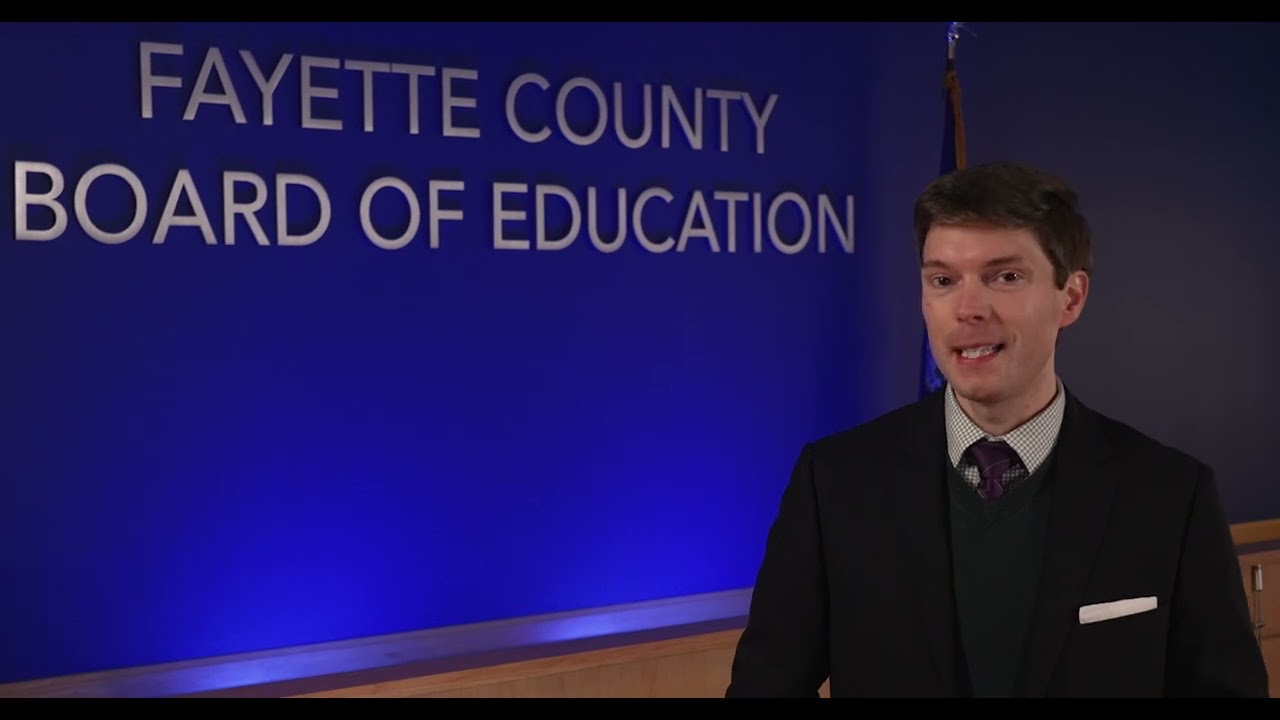
On January 28, 2025, the day after the Fayette County Board of Education renewed Superintendent Demetrus Liggins’ contract through 2029, the district posted a video to its YouTube channel. In it, board chair Tyler Murphy stands in front of the board-room seal and delivers a message to the families of Fayette County about the decision his board had just made on a 3-2 vote: it was “rooted in facts, evidence and common sense,” he says. “And you know we are not deterred by any noise or nonsense, ’cause the proof is in the pudding.”
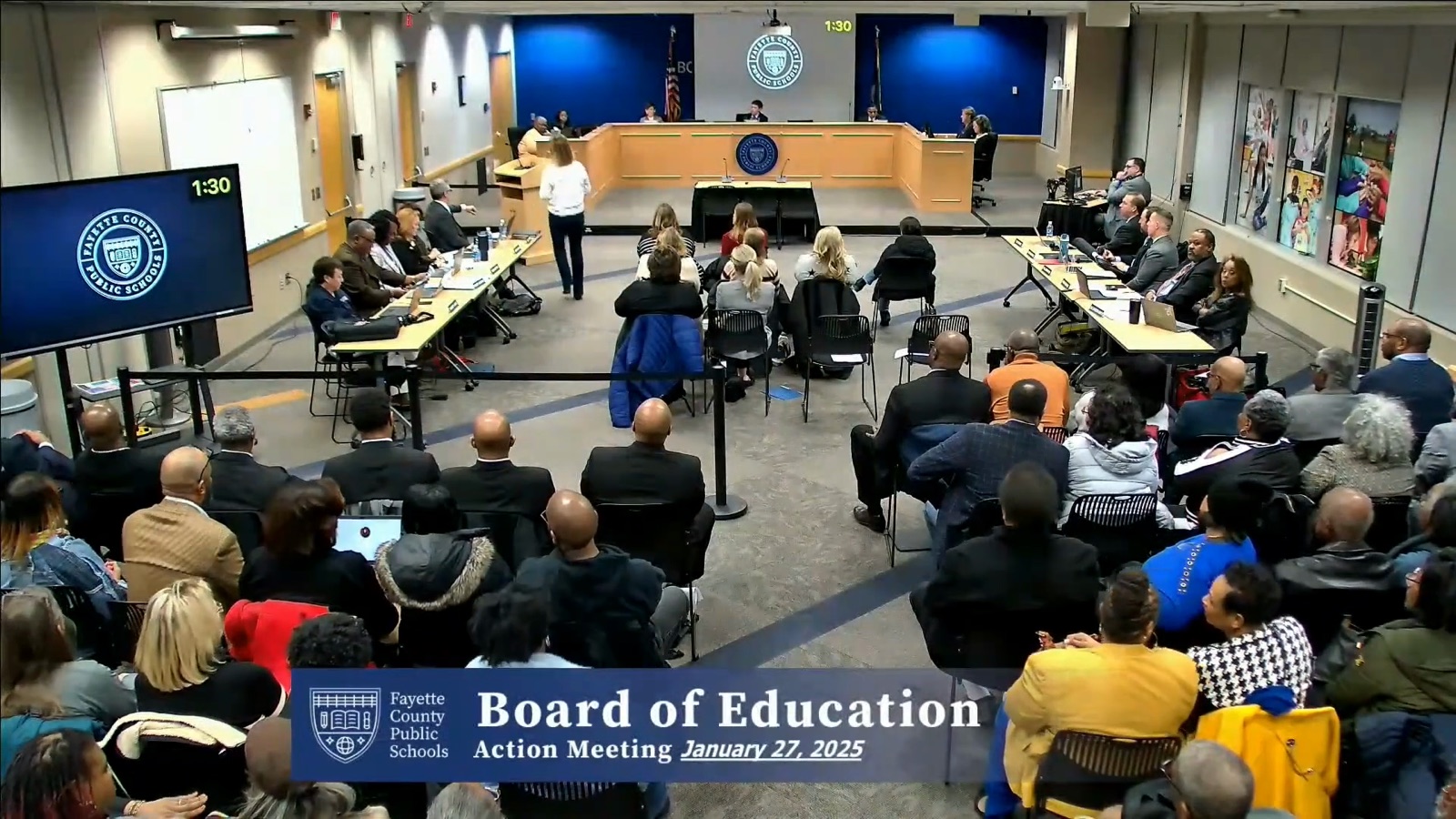
The noise, in this case, was a petition signed by more than 1,300 people, a boardroom crowd of about 300 that spilled into an overflow room, and 36 residents who signed up to speak. The nonsense was parents asking, over and over, where the money was going.
Last Friday night, Liggins’ attorney announced that the superintendent had agreed in principle to walk away in exchange for “the economic benefit of his contract” through June 30, 2029 — roughly $350,000 a year for three years he will not work, something in the neighborhood of a million dollars, from a district that just borrowed $95 million to make payroll and cut 120 jobs. Murphy says no agreement has been reached. The attorney says the framework “was his idea.”
Either way, the bill for not listening has come due. And it is worth walking back through exactly how the people who tried to warn this board were treated at every step — because the record, most of it in the board’s own words, is remarkable.
Step one: don’t wait for the facts
Three minutes into the January 27, 2025 meeting — before public comment, before discussion — board member Monica Mundy moved to table the contract vote until after the board’s budget retreat and Liggins’ first evaluation of the year. Amanda Ferguson seconded. Mundy’s reasoning was almost painfully modest: board policy said to take up renewal “as early as practical,” and, as she put it later that night, “it seems practical to take the next month or two to carefully analyze the facts... that would leave at least three to four months remaining on that contract.”
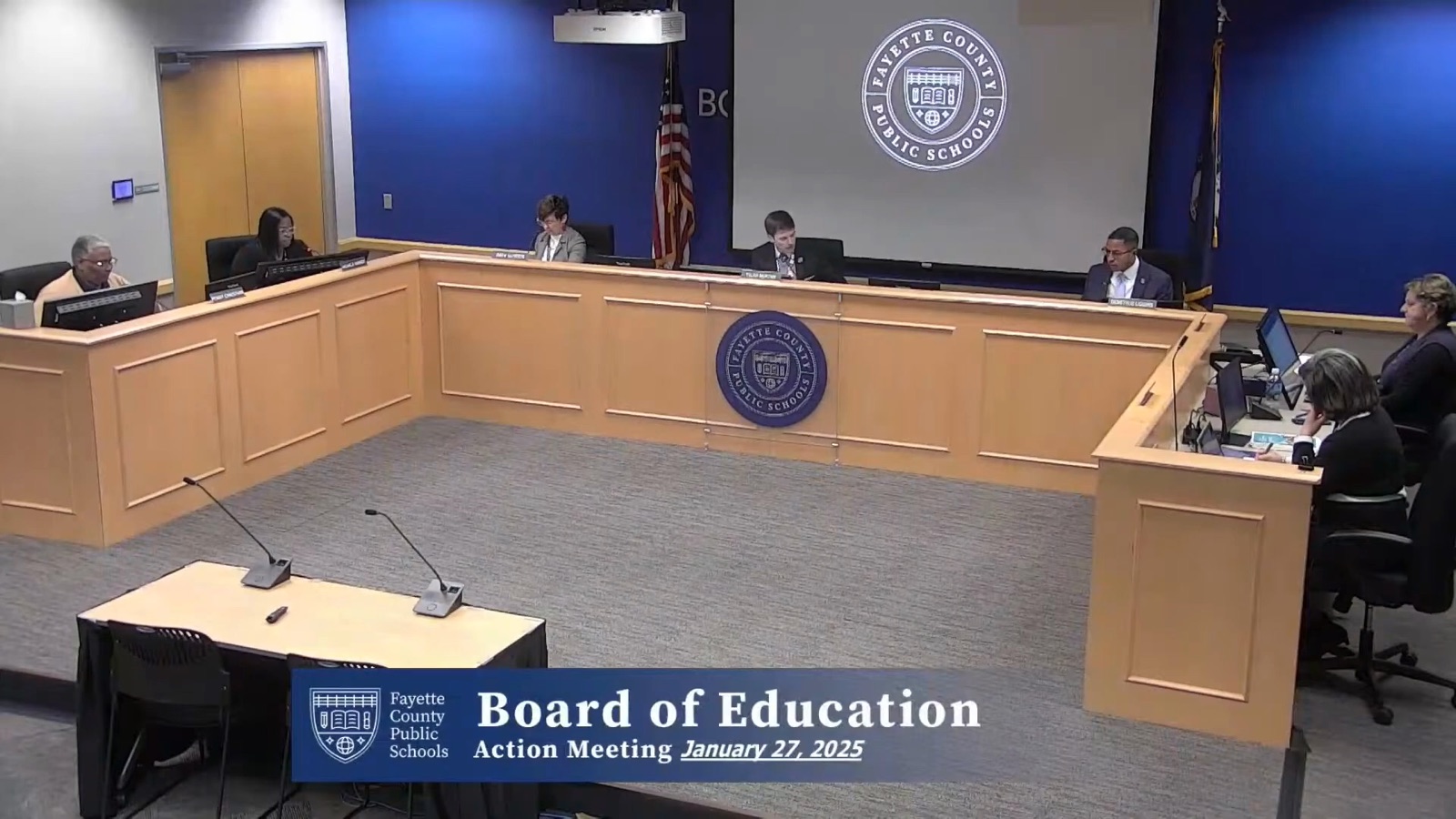
Murphy, Amy Green and Penny Christian voted the motion down. The board then spent the next half hour on School Board Recognition Month — a district-produced appreciation video and a parade of invited well-wishers — before getting to the part where parents were allowed to object to the thing that had already, functionally, been decided.
Here is what waiting would have cost: nothing. Liggins’ contract ran through June 30, 2025. Here is what waiting might have revealed: by May, the district was admitting to a $16 million shortfall. By June, the attorney general had voided the board’s Memorial-Day-weekend tax vote for shorting the public on notice, and the state auditor had opened a special examination. The evaluation Mundy wanted to wait for eventually arrived in July — five months after the board had already re-signed him for four years.
Step two: tell the public it’s their fault
The tone of renewal night is preserved on video. Christian, a brand-new board member casting her first major vote, compared Liggins’ compensation — then about $369,000 in total, more than the governor’s — to UK basketball coach Mark Pope’s $5.5 million, and challenged critics “who have these issues, imagined or otherwise,” to start showing up: “When you say you don’t know, when you say you’re not aware, sometimes transparency is a choice.”
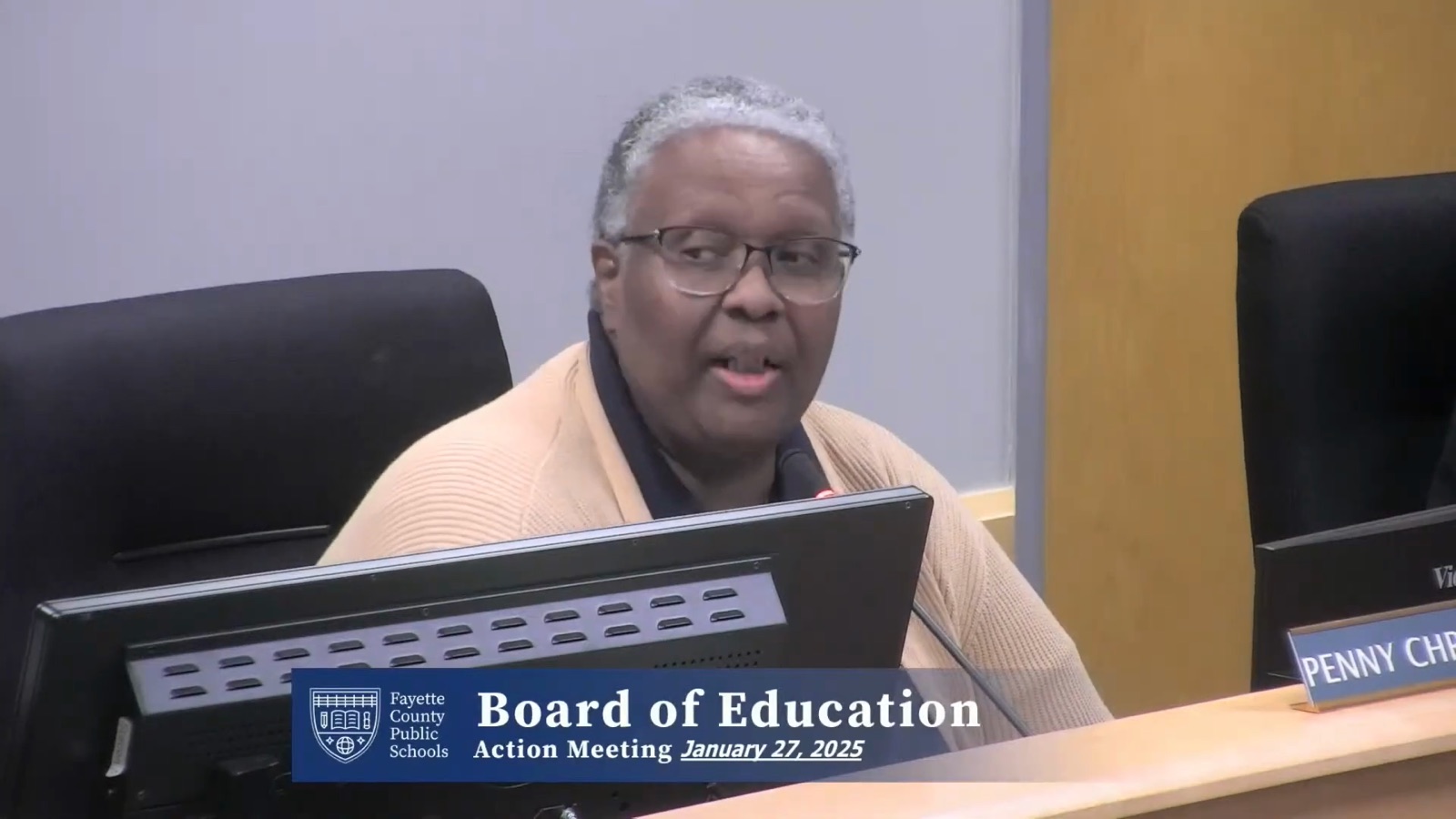
Sit with that sentence. Rachel Buser, the parent whose petition started the fight, had just told the board she tried to check central-office salaries and found them “buried in a 28-page unsearchable document.” The attorney general would shortly find the board itself violated the Open Meetings Act on its tax vote. And the board’s answer to parents, from the dais, was that their ignorance was their choice.
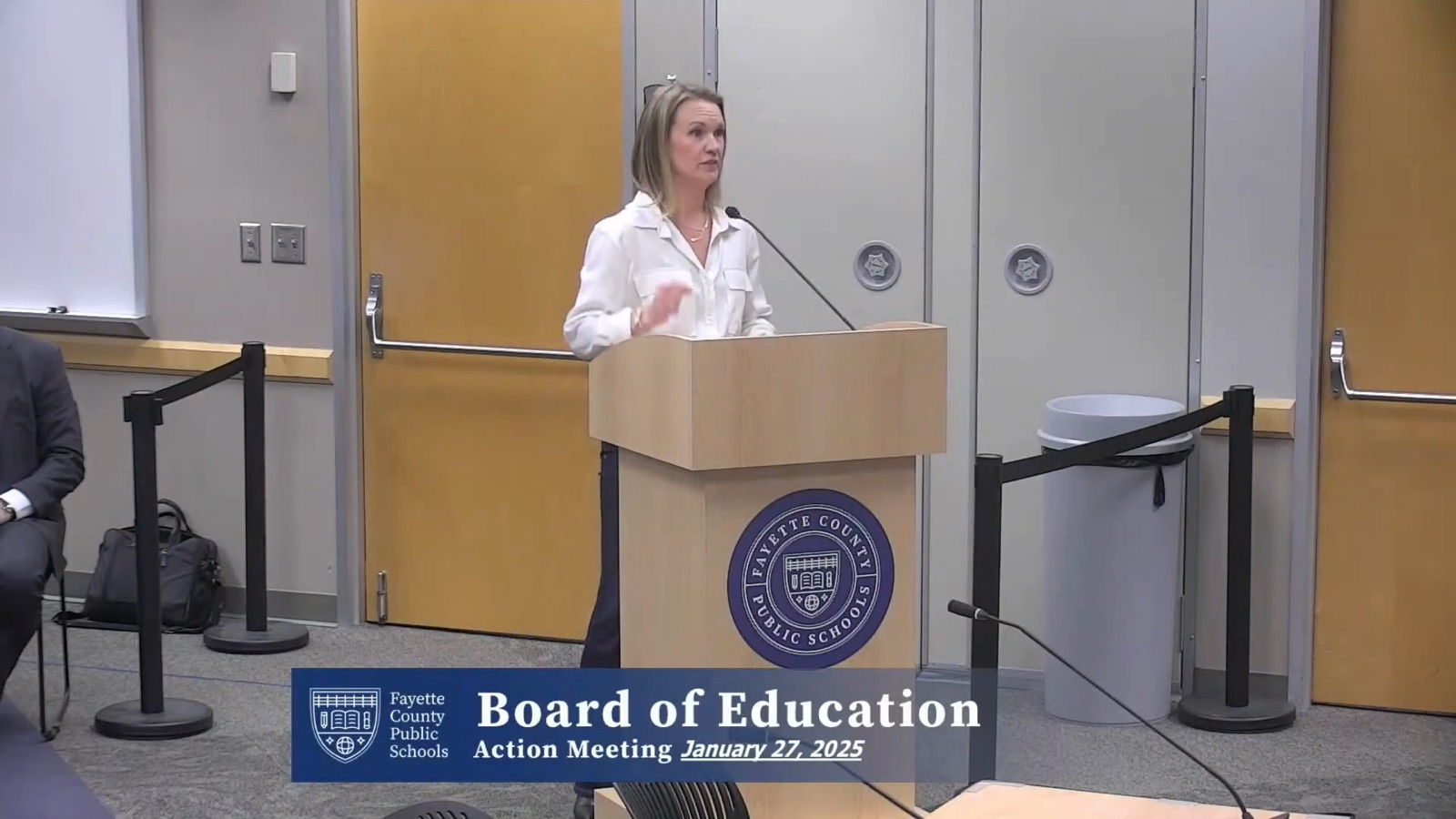
Murphy’s closing speech ran seven minutes. Replacing a superintendent would mean “lurching our district into that process for no reason.” The real question was “not whether or not we want to renew Dr. Liggins’ contract — it’s what is going to be our commitment to support him.” There was even a media-criticism aside: in “an age of misinformation and disinformation,” local journalism should “report facts and highlight the positive,” not “the headlines and the clickbait.” Then: “The proof is in the pudding, and you’ve heard plenty of the proof tonight.”
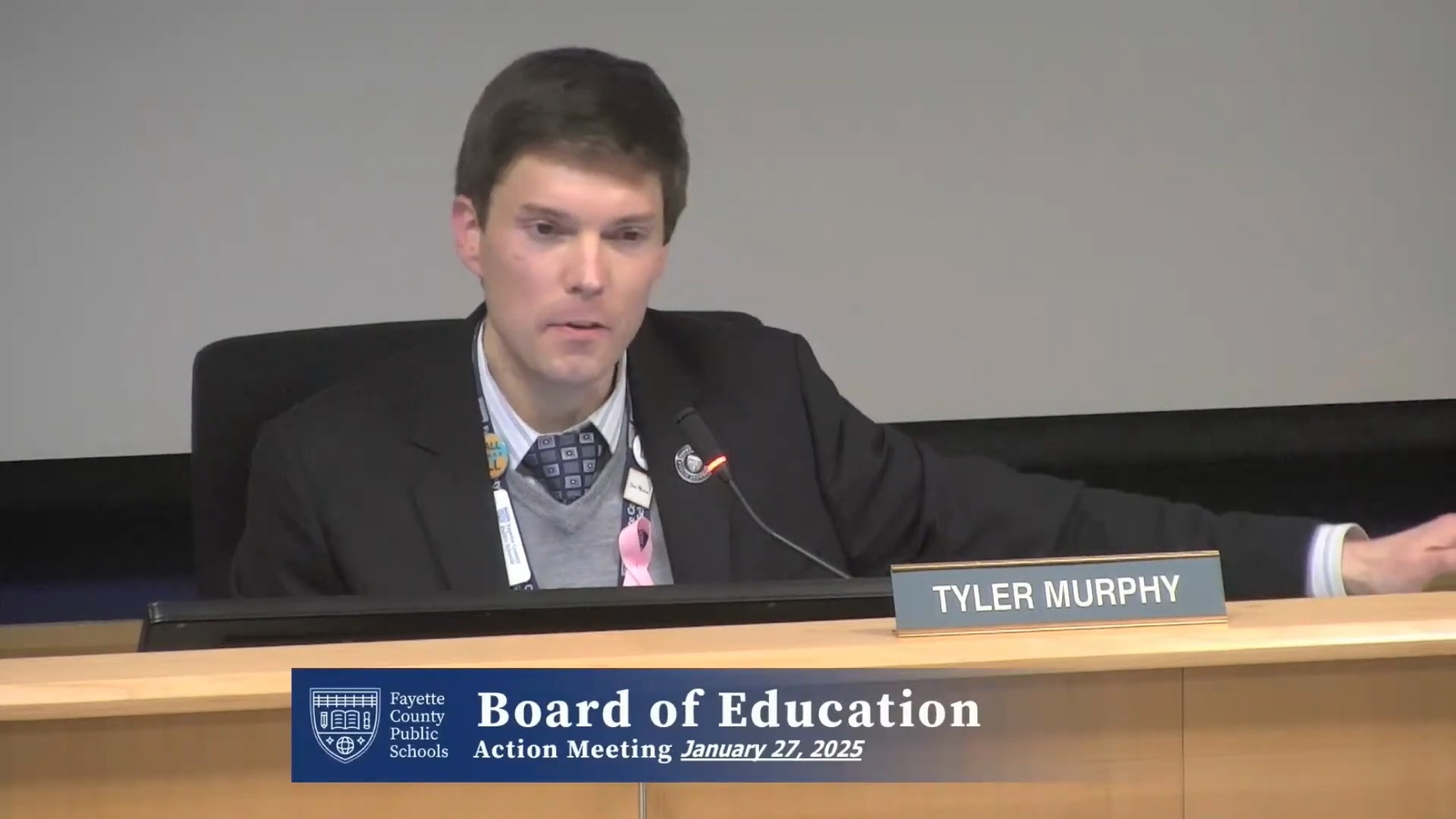
What the board knew, and the public didn’t: a month earlier, in December 2024, when Ferguson emailed Liggins asking why the board hadn’t been told departments were ordered to sketch out roughly 10 percent budget trims, Liggins had assured her district finances were “very healthy” — and cautioned her against entertaining staff-level complaints. The district’s own budget director had been warning in writing since February 2024 that the end of federal COVID money required $18–19 million in cuts. In August 2025, Liggins put her on administrative leave; her attorney says it was to keep her from sharing financial data with the school board. She is suing.
Step three: sanitize the record
If you were a Fayette County parent who couldn’t make it that night and relied on the district’s official “Board Buzz” recap, here is what you learned: the board “voted to renew” the contract, Murphy said Liggins “made a commitment to this community,” and nearly a dozen community supporters had gathered to thank the board for its service.
No vote count. No mention that two of five board members voted no. No mention of the motion to wait. No petitions, no overflow room, no 36 speakers. The most contested board decision in years, rendered as a ribbon-cutting.
And then there is the video itself. Fayette County Public Schools livestreams its action meetings on YouTube; the December 2024 and February 2025 meetings sit on the district’s channel as public livestream archives, like every other meeting that year. The January 27, 2025 meeting does not. No public stream of it exists. The only copy on the district’s channel was uploaded seven weeks later, on March 17, 2025 — and it is unlisted, invisible on the channel page and in search, reachable only through a link buried in that same sanitized newsletter. Maybe the stream failed that night; equipment does fail. But the district never said so, and for seven weeks the public record of a three-hour meeting attended by 300 people simply didn’t exist — and when it quietly appeared, it was hidden from view. The district owes the public an explanation.
Step four: grade your own homework
In June 2024, the board rated Liggins’ year “an exceptional performance.” The 2023 evaluation had specifically praised his “management of the budget.” In July 2025 — with the shortfall public, the tax vote voided, and the auditor’s examination underway — the same 3-2 majority rated him “meets expectations” in all seven areas on the board’s self-designed pass/fail scale, in a written statement that credited him with, among other things, “five consecutive clean financial audits.” The board’s one note of concern: budget matters could use “further refinement in messaging.”
Messaging. Nine months later the district’s new interim CFO announced the books had been “fundamentally misstated” going back to at least 2008, and that fiscal year 2027 was projected to open with a beginning balance of zero.
By September 2025, even Liggins was ahead of his own board, conceding to legislators in Frankfort that “much of the criticism surrounding FCPS budgeting process has indeed been warranted.” Warranted. The criticism his board chair had filed under “noise or nonsense,” the concerns “imagined or otherwise” — warranted, by the man himself.
Step five: the exit
The last act has run on the same script. Liggins was suspended June 10 after a two-and-a-half-hour closed session — a session he now argues, with some irony and a Kentucky Supreme Court precedent behind him, violated the same Open Meetings Act the board broke in 2025. (The attorney general’s answer is due about now.) The district said he had submitted a resignation letter; he said he hadn’t. His 1 a.m. email asking for a year of walking-away money surfaced; he rescinded it by morning. Gov. Andy Beshear said the quiet part: you don’t leave a district laying off teachers “and expect it to pay you more.”
Through it all, Murphy assured the public the board was “not entertaining any motions for a separation package.” On Friday evening, the board let it be known it had rejected Liggins’ demands as excessive. By Friday night, Liggins’ attorney was announcing the million-dollar framework — and attributing the idea to Murphy. Murphy says there’s no deal. The board meets July 20.
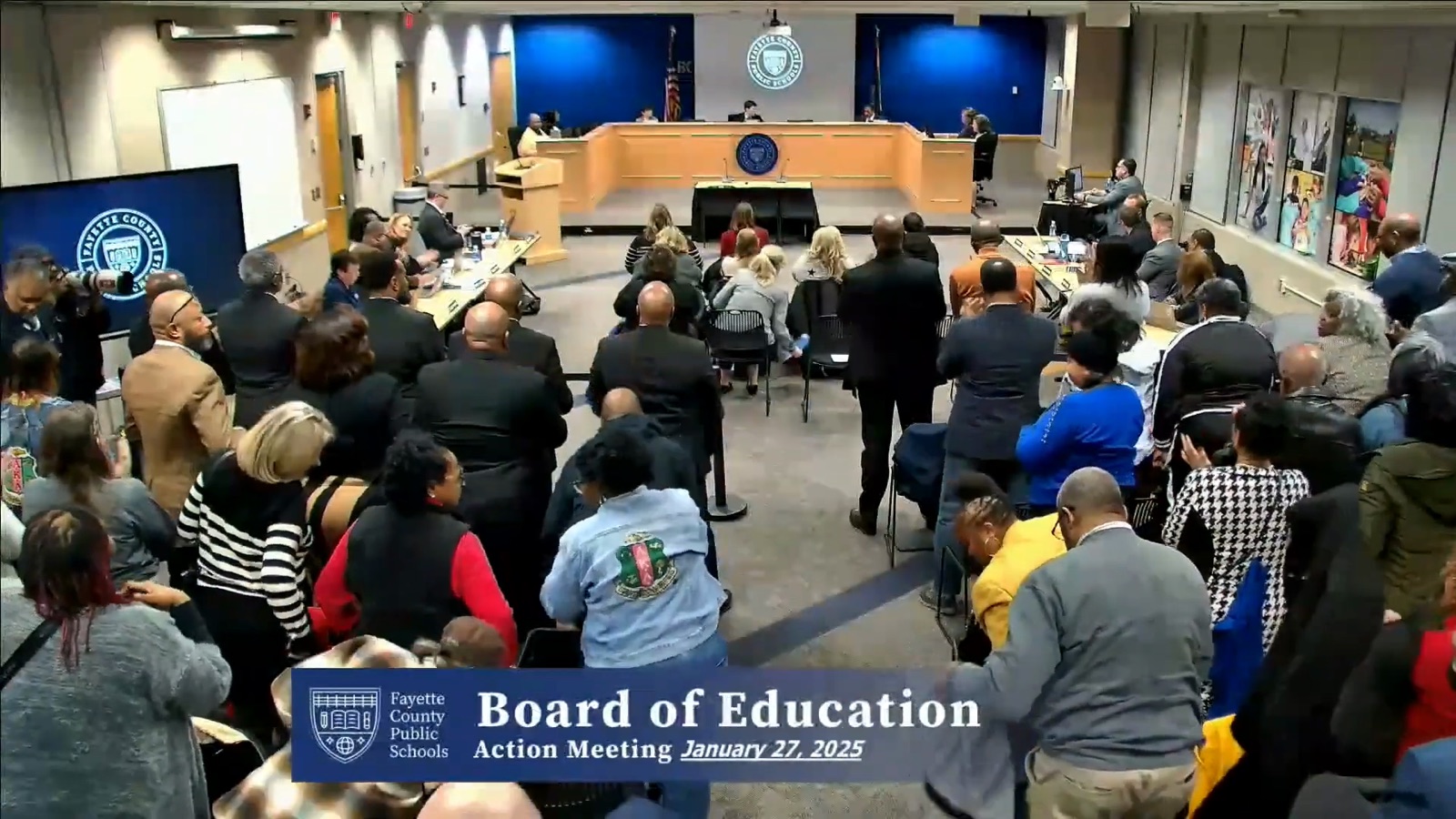
Maybe there is no deal. But every settlement scenario on the table prices out the same way, because the board set the price itself: three years, at roughly $350,000 a year, of a contract that did not have to exist. If the board had simply waited — the month or two Mundy asked for, the evaluation cycle its own policy contemplated — Liggins’ contract would have expired on June 30, 2025, eleven days before anyone had to explain a $16 million hole. The buyout now under negotiation is the renewal. Dollar for dollar, it is the price of that 3-2 vote, and of the two-year campaign to convince Fayette County that the people asking questions were the problem.
The parents were right. The petition was right. The budget director was right. The two board members who voted no were right. And the three who voted yes spent eighteen months telling all of them, in official videos and sanitized newsletters and lectures from the dais, that they just didn’t understand how well things were going.
Sometimes transparency is a choice. On that much, the board and this column agree.
Quotes from the January 27, 2025 meeting are taken from the district’s recording (youtu.be/bIIZxJWFuBQ): the tabling motion at 3:12, Mundy’s statement at 2:17:54, Christian’s remarks at 2:19:53, Green’s at 2:21:28, Murphy’s at 2:22:53–2:30:29, and the 3-2 vote at 2:30:40.
Sources
- FCPS School Board Action Meeting, Jan. 27, 2025 (district recording, unlisted)
- FCPS “Chairman’s Video” announcing the renewal, Jan. 28, 2025
- FCPS Board Buzz recap, Jan. 27, 2025
- Herald-Leader: Superintendent Liggins’ contract renewed for another 4 years by Fayette school board (Jan. 27, 2025)
- Herald-Leader: ‘Unacceptable.’ Petition circulating to not renew Fayette superintendent’s contract (Jan. 16, 2025)
- Herald-Leader: Amid controversy, will the Fayette school board renew Liggins’ contract Monday? (Jan. 27, 2025)
- Herald-Leader: With 3-2 vote, FCPS school board says superintendent ‘meets expectations’ (July 23, 2025)
- Herald-Leader: School Board evaluation: Fayette superintendent had an ‘exceptional performance’ (June 25, 2024)
- Herald-Leader: FCPS superintendent’s lawyer says settlement has been reached. School board says otherwise (July 10, 2026)
- FOX 56: Internal emails reveal early warnings ahead of FCPS budget shortfall
- FOX 56: Fayette County School Board renews Superintendent Liggins’ contract after weeks of controversy
- LEX 18: Gov. Beshear: Fayette County Public School superintendent shouldn’t get buyout (June 11, 2026)
- Kentucky Lantern: AG says Fayette school board didn’t give public notice before tax vote (June 4, 2025)
- WKYT: FCPS says no agreement with Dr. Liggins, despite attorney’s claim (July 11, 2026)
- The Lexington Times: How FCPS Got Here — The Liggins Crisis, Traced Back (July 2, 2026)