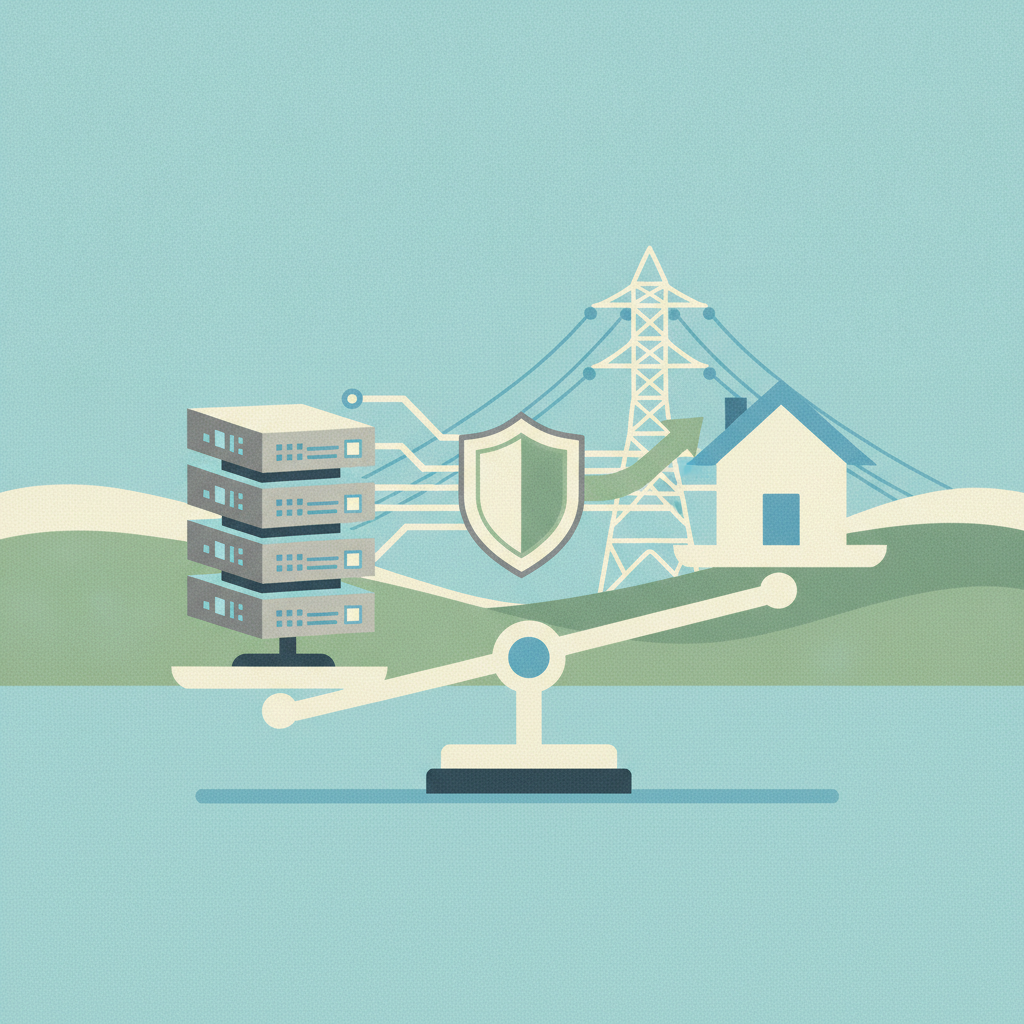
Federal bill aims to balance data center growth with utility costs
Legislation designed to prevent ordinary utility customers from bearing the financial burden of powering energy-intensive data centers has advanced through a U.S. House committee chaired by a Kentucky lawmaker, according to WUKY 91.3 FM.
The Federal Ratepayer Protection Act represents an attempt to establish guardrails around the explosive growth of data center development—facilities crucial for artificial intelligence and cloud computing operations—while ensuring that residential and small business ratepayers do not subsidize infrastructure upgrades needed to support them.
The measure cleared a House committee despite concerns from some stakeholders about potential impacts on technological advancement. Proponents emphasized the legislation is not anti-AI or anti-innovation, but rather designed to ensure that the costs of accommodating data centers' massive electricity demands fall on those benefiting from the facilities rather than the general utility customer base.
Data centers require enormous amounts of electrical power and cooling capacity. As companies race to build facilities to support artificial intelligence applications and cloud services, utilities across the country face significant infrastructure investments to accommodate that demand. Without protections, those costs can be passed on to regular customers through rate increases.
The issue has growing relevance for Kentucky, where utilities and state officials have increasingly discussed data center development as an economic opportunity. However, expanding data center capacity often requires substantial upgrades to electrical grids and water systems, raising questions about who should pay for those improvements.
The legislation seeks to establish clearer cost-allocation rules, ensuring that data center operators and their customers bear appropriate responsibility for necessary infrastructure investments rather than shifting those expenses to other ratepayers.
The bill's advancement through the House committee marks a significant step, though broader congressional passage remains uncertain. The measure reflects mounting pressure from consumer advocates and state utility regulators to develop national standards around data center development costs amid rapid AI industry growth.