Kentucky Ranked Second in the Nation for Hunger and It’s Only Getting Worse
Kentucky’s food insecurity ranked second highest in the nation between 2022 and 2024, according to recent USDA data. Almost one in five Kentuckians were food insecure (18.8%, compared to a 13.3% national average), meaning they didn’t have consistent access to enough nutrition. Even worse, Kentucky had the nation’s highest prevalence of very low food security at 9%, compared to a national average of 5.4%. Very low food security occurs when households report disrupted eating patterns at levels below what is considered adequate.
In the years since this data was collected, conditions for hunger have only worsened, with grocery prices increasing and cuts to a vital program that helps people pay for them.
At a time when over 60% of Americans are being forced to cut back on groceries, Congress passed the One Big Beautiful Bill Act (H.R.1) which slashed our best tool against hunger, the Supplemental Nutrition Assistance Program (SNAP). SNAP provides grocery money to over 543,000 Kentuckians every month. The results of the legislation are clear. As of June 2026, 82,771 Kentuckians, including 26,795 children, have lost SNAP since H.R.1 was implemented. This decline isn’t due to people no longer needing grocery help, but is the result of them being cut off from SNAP because of H.R.1’s strict changes.
In addition to changing eligibility rules by expanding existing work reporting requirements, H.R.1 put food assistance at risk for an additional 114,000 Kentuckians, including children, working parents with low-paying jobs, older adults with fixed incomes, former foster youth and veterans.
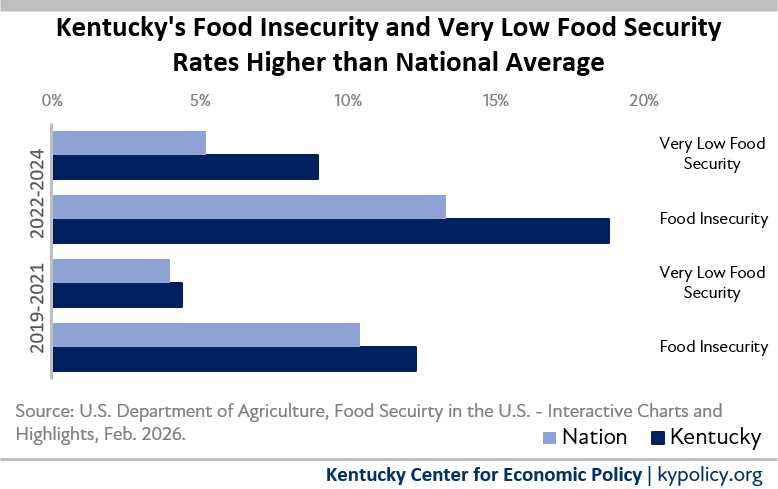
Kentucky’s high rates of food insecurity between 2022 and 2024 are a stark increase from rates between 2019 and 2021, when Kentucky and other states provided COVID-era supports to make life more affordable. For example, SNAP implemented a series of flexibilities during the pandemic to ensure people were fed. Those flexibilities included waiving the work reporting requirements, increasing the maximum benefit amount and providing emergency allotments resulting in a temporary 15% increase in benefits. During this time, Kentucky’s food insecurity and very low food security prevalence were both the lowest they had been in over a decade. Additional aid reinforced this trend, showing federal relief programs slashed poverty in Kentucky by two-thirds during this same period according to Census data. Despite the vital help basic needs programs were providing and the proven impact on poverty and hunger, Kentucky legislators chose to terminate this support prematurely by passing Senate Joint Resolution 150 in 2022, ending the pandemic state of emergency.
Now, with so many Kentuckians struggling, Congress must address worsening hunger. Lawmakers should act urgently to reverse course and delay the further implementation of H.R.1 through the farm bill and reject any efforts to make more cuts to SNAP. They should also keep USDA from pursuing further regulations that create barriers to SNAP and work together to strengthen our basic needs programs to keep Kentuckians fed.
Photo credit: Dare to Care
The post Kentucky Ranked Second in the Nation for Hunger and It’s Only Getting Worse appeared first on Kentucky Center for Economic Policy.