Lexington needs thousands of housing units. A local church is helping to fill the gap for seniors
This article is part of CivicLex's ongoing Civic Spotlight series, where we explore how communities are tackling local challenges and what we can learn. Curious about CivicLex's solutions journalism? We want to hear from you! Send an email to [email protected] or respond to the one-question survey at the end of this article.
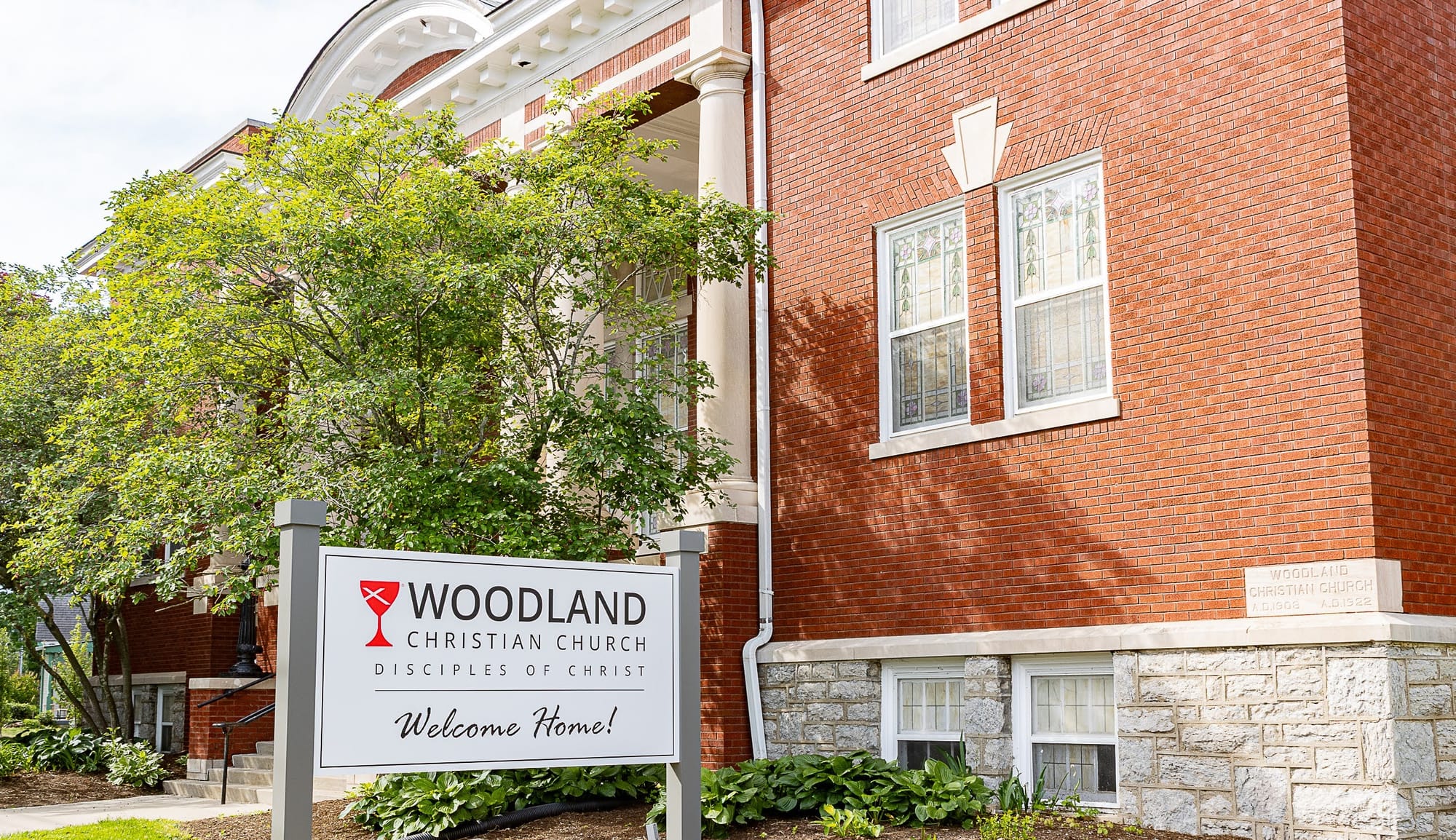
Woodland Christian Church has stood on its leafy corner of Kentucky and East High Street for more than a century.
But shortly after her arrival during the pandemic, Rev. Christy Jo Harber confronted declining church membership and mounting maintenance costs. The church needed more than $1 million in baseline repairs to truly thrive – including to restore its historic sanctuary.
Today, thanks to a partnership with local developer Winterwood Inc., the church's members are worshipping in a fully restored sanctuary, have renovated ministry space, and are welcoming newcomers.
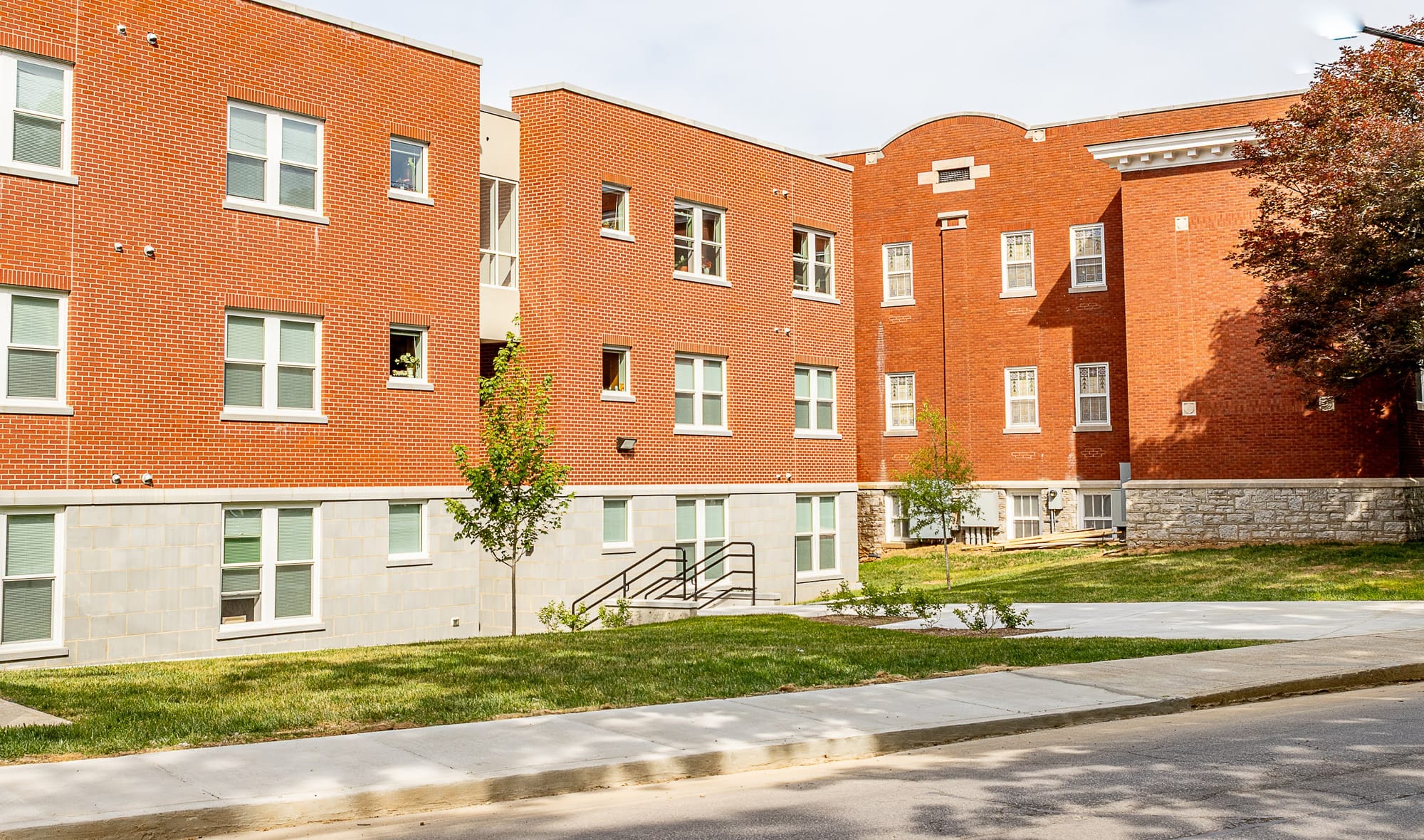
Woodland Christian Church is now home to 38 units of affordable housing for senior Lexington residents. Called The Oaks, units are reserved for seniors aged 55 or older making less than 60% of the area median income, as reported by the Lexington Herald-Leader.
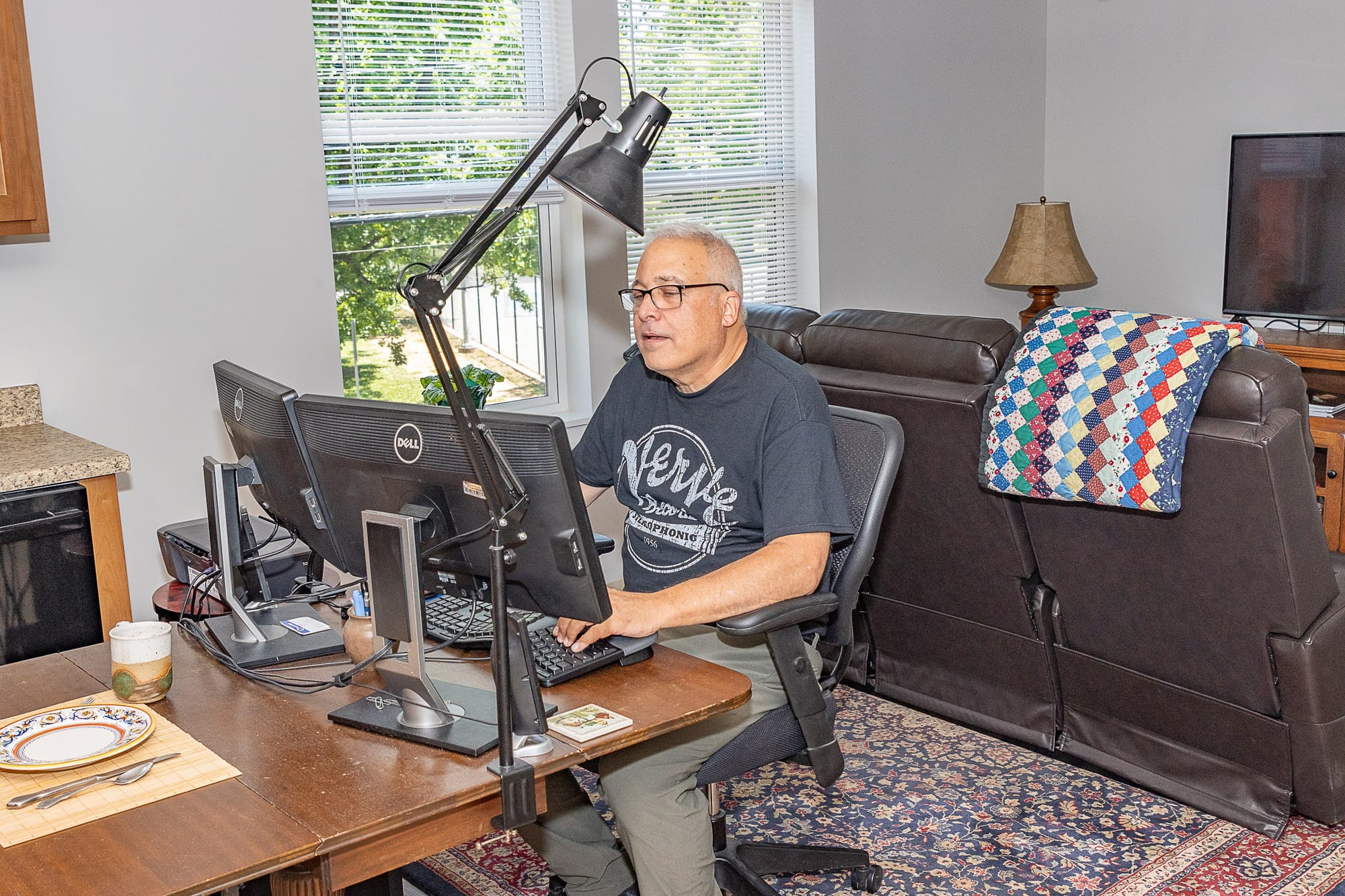
Keith Reid enjoys the convenience The Oaks offers. Reid, who is 47 and describes himself as neurodivergent, has mobility issues. Living on site, he no longer needs to commute for the church's weekly service, held on Sundays at 10 a.m.
"I literally can leave out my door at 9:55 and still be here on time and not have to worry about traffic and weather," Reid said. "The only traffic I have to worry about is foot traffic," he joked.
Reid pays $659 a month for his ground floor unit, utilities included. Living on a very limited grocery budget, Reid said his neighbors often share food. Church cookouts and community events also help him get something to eat.
The project has transformed Woodland Christian Church, Harber said.
This Easter marked the first time in six years the church's restored sanctuary was open for worship. After years of declining membership, Harber said the project to integrate affordable housing into its ministry spaces is breathing new life into Woodland's congregation.
"We feel like this is a true resurrection story," Harber told CivicLex.
Woodland Christian Church's transformation could be considered a local example of the national "Yes in God's Backyard," or YIGBY, movement. As explained by Shelterforce, it proposes allowing religious institutions to help solve the national housing crisis by repurposing their underused land and buildings for affordable housing.
"This is just a prime location to have housing in," Harber told CivicLex, noting the church is located across the street from Woodland Park, is a half-mile from Kroger, and stands in a generally walkable residential area.
Walkability was a draw for 73-year-old Oaks resident Clarice Taylor. A New Yorker, Taylor likes to get around on her own two feet. She can walk to a coffee shop, bookstore, various restaurants, and her physical therapist. All are within walking distance of her unit.
"This place feels like a village," Taylor said of the walkable neighborhood around her new home. "I love living here."
Lexington isn't exempt from the lack of affordable housing experienced by residents of large coastal cities.
Facing a shortage of more than 22,000 housing units, Lexington has also experienced rising rents in recent years, including a 43.5% increase in typical rent price between 2021 and 2026, according to reporting by the Herald-Leader.
A new state law – House Bill 333 – aims to simplify the process of affordable housing development for faith-based organizations by streamlining planning and zoning requirements, according to the Homeless and Housing Coalition of Kentucky.
As explained by Zach Worsham, vice president of Winterwood Inc., the hardest part isn't even construction itself but access to resources, coordination and buy-in at the local level.
For Harber, much of the nation's affordable housing crisis comes down to a lack of creative collaboration, but it doesn't have to be that way.
“I think in our culture, it’s so easy to be steeped into a scarcity mindset," Harber said. "What we have learned here at Woodland is that we truly have everything that we need in order to thrive. That only happens when we choose to share our resources and partner together."
How did the partnership come together?
The conversation began in 2021. Through a mutual church connection, Harber was introduced to Fred Worsham, brother to Zach Worsham. The Worsham family owns Winterwood Inc., a local developer that has specialized in affordable housing since 1979.
According to Harber, it was Fred and Zach Worsham who first shared their vision of Woodland becoming a space for senior affordable housing. When the idea was shared with the church's leadership, it was a "resounding yes," Harber said.
“When we met with them around the table, they said ‘Tell us what your dreams are for your ministry,'" Harber told CivicLex, adding the partnership enabled casting the “biggest vision we’ve ever had for Woodland.”
After that, the church entered what Harber called a "season of discernment" that quickly led to full partnership with Winterwood. The project's goals: restore the church's historic sanctuary, renovate its ministry spaces, and create 38 units of affordable housing for seniors.
So how does the deal with the developer work? Harber said the church entered into a 99-year lease with Winterwood, which makes income from renting the apartment units. As part of the deal, Winterwood takes care of the property's maintenance and upkeep.
"Which is a huge burden lifted from our shoulders," Harber said, adding it frees up church resources for ministry and community outreach.
Taylor said that living at The Oaks has given her a sense of "wholeness" after years living in an older apartment nearby.
"When I come home, I feel peaceful," said Taylor, who enjoys hearing children play in the neighboring Woodland Park. "I feel like I'm home."
Asked how the church built consensus among its membership, Harber said it had been facing serious questions about its future for years. Because it needed more than $1 million in baseline repairs, it couldn't be sure how many people would be invested in helping the church try something new. The coronavirus pandemic also gave its community a chance to pause and consider solutions, Harber said.
"When this solution came to the church, folks were excited about the potential to remain on our historic corner and breathe new life into our church and our community," Harber said, adding that "every square foot of our building is used to its maximum potential."
What made the project possible?
As explained by Zach Worsham, vice president of Winterwood Inc., it wasn't enough that the land was available for construction.
Getting the project across the finish line required a careful mix of financial capital, balancing multiple requirements and timelines, navigating local planning and zoning processes, developing a design that worked both functionally and aesthetically in the neighborhood's historic context, and getting stakeholders to buy in.
That process took time. While initial conversations happened in 2021, the project didn't break ground until 2025.
Worsham likened the work to that of an orchestra conductor, an analogy he borrowed from a speaker at the project's grand opening.
"There's a lot of different parts that have to come together all at once to make something that works really well," Worsham explained.
In Woodland's case, the project primarily used the federal Low-Income Housing Tax Credit program, which is the federal government's main policy tool for developing affordable rental housing. Owners and developers receiving tax credits through the program agree to meet an income test for tenants and a gross rent test.
Affordability requirements make a difference for residents like Reid, who relies on a mix of disability benefits, Medicare, Medicaid, and Section 8 assistance. After paying his bills, Reid feels lucky if he has $100 left at the end of the month, he said.
In the end though, the Low-Income Housing Tax Credit wasn't enough, and the project had to seek other sources of funding and financing. That included state historic tax credit programs, support from Lexington's own affordable housing fund, and other financing strategies.
Local planning and zoning processes can also open up affordable housing projects to opposition from neighbors, Worsham said. In Woodland's case, however, most concerns were easy to address. (Harber said some of the church's neighbors raised concerns about potential loss of parking, though street parking remains available in the area, and the church was able to work through that concern.)
The newly enacted Kentucky House Bill 333 promises to streamline the planning and zoning process for affordable housing development on property owned by religious institutions. However, Worsham noted the law sets a restriction on developments of 24 units or less, meaning the Woodland project wouldn't have benefitted.
House Bill 333 will help smooth the way for some types of affordable housing projects, Worsham said, but he sees the new law as a step in the right direction, rather than a "silver bullet".
"I don't see a magic solution," Worsham said of the numerous hurdles to building more affordable housing. "It just takes collaboration... You want to talk about what a silver bullet is, it's a bunch of people who are willing to work together. And unfortunately, you can't legislate that."
How accessible is the project for its senior population?
Worsham said the project meets all requirements under the Americans with Disabilities Act for accessible common areas and amenities.
Upgrades include ADA-compliant entrances and replacing the church's old elevator – which often broke down and previously wasn't large enough to fit a wheelchair. The church now has a new, fully accessible elevator.
Additionally, each unit has been built with what Worsham described as an "adaptable" design. That means they can be modified with grab bars and wheelchair-friendly kitchen workstations at a resident's request, Worsham said.
"If someone in a unit has something come up, we can reasonably convert aspects of the apartment into an accessible function," Worsham told CivicLex, adding those adjustments are made on a case-by-case basis.
Asked about the units' accessibility, Reid said he wished some upgrades went further. For example, he would've liked to see more units with walk-in showers, rather than bathtubs. Some units feature them, though not all, Reid said.
"Because you have people that have hip issues, can't step up into a tub, you know," Reid said. "I think all of them should have been where you could just literally walk right into it."
There are no current plans to broadly redesign all units to feature walk-in showers, Worsham confirmed. He noted that 5% of the 38 total units – consistent with a federal rule – have been built to be accessible for people with mobility issues.
Another 2% of units have features for those with auditory or visual disabilities, Worsham said.
Reid said he would also prefer grab bars in his own unit, just for peace of mind as he gets older.
"I don't necessarily think I need anything, but I would say I wish that there would have been bars and stuff in the shower and around the wall," Reid said.
"Sometimes I get really, really dizzy, and sometimes I'll need to have something to be able to catch myself," he said.
Harber said grab bars can be installed in a unit upon a resident's request.
She added that Woodland Christian Church was not compliant with the Americans with Disabilities Act prior to its partnership with Winterwood.
"Accessibility was important to both us and Winterwood from the beginning and Winterwood addressed all the accessibility needs we requested and more," Harber wrote in a follow-up email.
Along with the upgraded elevator, "Our shared kitchen, restrooms, and main entrances are also ADA compliant," Harber wrote.
"Winterwood has always kept accessibility in mind and I'm confident that any concerns taken to them would be addressed appropriately," Harber wrote.
Limits of the model
Asked how she would respond to critics contending the project doesn't deliver enough affordable housing, Harber's response is direct.
"They’re right. It’s not enough," Harber said, acknowledging that Lexington needs much more housing.
The project has made a meaningful difference for residents like Reid, but affordable housing hasn't eliminated every hardship he faces.
Even with lower rent, his budget remains tight enough that he sometimes struggles to afford food.
Reid receives some food assistance through his insurance and about $20 a month in SNAP benefits. Local food banks and community events help a little, but when those limited resources are exhausted, he often goes hungry.
"I just don't eat," Reid said. "I mean, it's that simple. If I don't have it, I don't have it."
For Harber, her church's experience is one that can be replicated at other places of worship, with a multiplying effect.
“If each faith community can consider: ‘What can we do? How many units can we add of affordable housing?’ We are all able to do as much good as we can," Harber said. "It takes everyone doing their part."
Taylor, who is not a member of Woodland Christian Church, agreed.
"I think churches are well positioned in their communities... to extend that hand," Taylor added. "To me, that's a Christian thing."