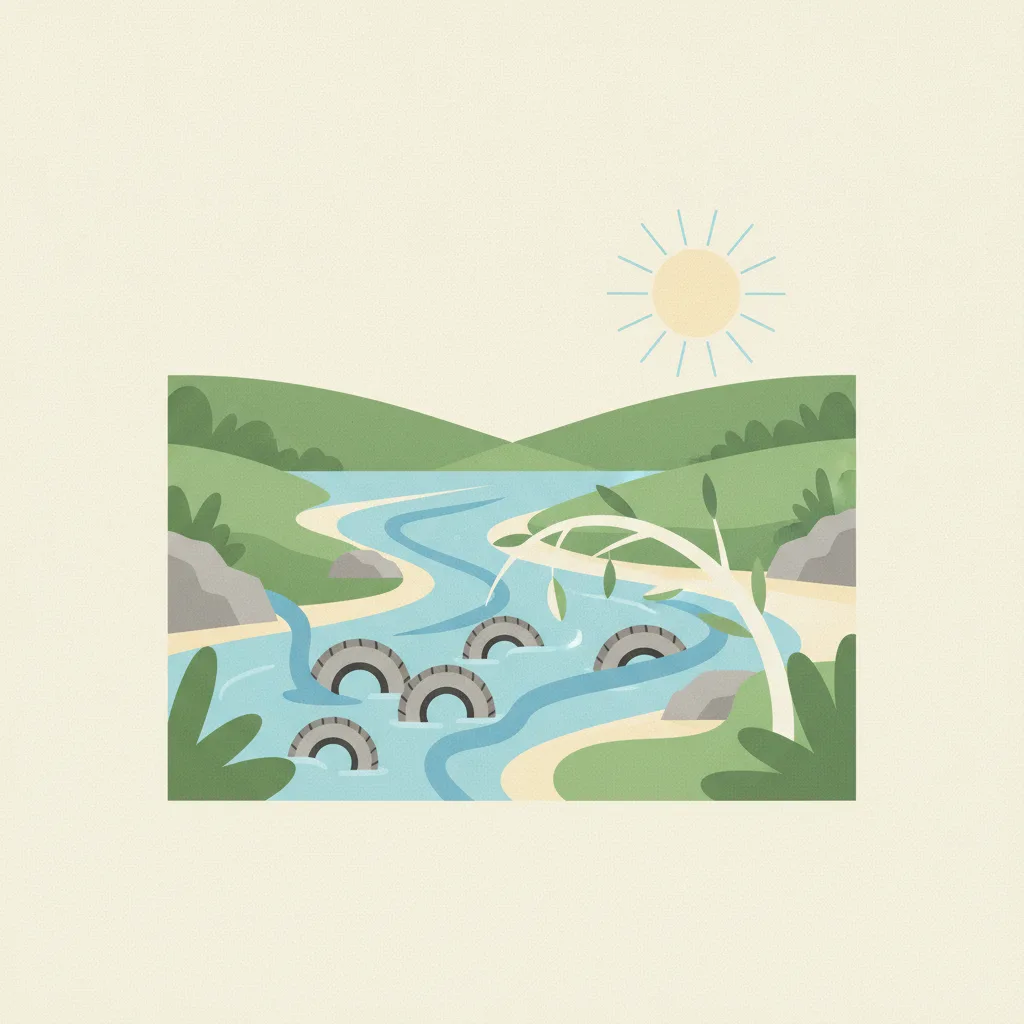
Tire pollution choking Kentucky waterways, advocates warn
Discarded tires are increasingly polluting Kentucky's rivers and streams, leaching toxic chemicals into waterways and posing threats to aquatic life and human health, according to environmental advocates. In 2024, the Kentucky Waterways Alliance pulled approximately 200 tires from a 4-mile stretch of the Red River near Clay City, illustrating the scope of the problem statewide, according to reporting by Public News Service.
Nick Hart, water policy director for the Kentucky Waterways Alliance, said the tire dumping is not unusual and appears to be worsening. "We've worked with some partners who remove tires out of the same stretch of river every single year, and we work with other partners who've removed tens of thousands of tires out of one stretch of river or one river over numerous years," Hart said.
Tires contain benzene, mercury, PFAS and other hazardous chemicals that contaminate drinking water sources and harm aquatic ecosystems. They also impede water flow in culverts during flooding events and reduce property values across surrounding communities, Hart said.
Environmental advocates blame decades of unscrupulous business practices as a root cause. Hart recounted how operators "pose as a tire recycler and stockpile used tires" in semi-truck containers, then "go and dump the entire tractor-trailer into a river" during flood events.
To combat the problem, the Kentucky Waterways Alliance developed an online reporting dashboard that allows residents to report dumped tires using smartphones. The tool creates a visual map showing where tires have been reported, helping advocates locate and remove them efficiently.
Kentucky officials have begun addressing the issue through funding initiatives. In 2024, Gov. Andy Beshear announced more than $1.3 million in funding for counties to use recycled waste tires in asphalt projects and recreational facilities like trails, picnic tables and parking curbs. Properly recycled tires can also be converted into rubber mulch, athletic surfaces and landscaping materials, reducing the likelihood they end up in waterways.
Environmental advocates emphasize that state programs and recycling infrastructure are not keeping pace with the scale of illegal dumping. Cleanup volunteers have called for additional state funding and attention to prevent further degradation of Kentucky's waterways.