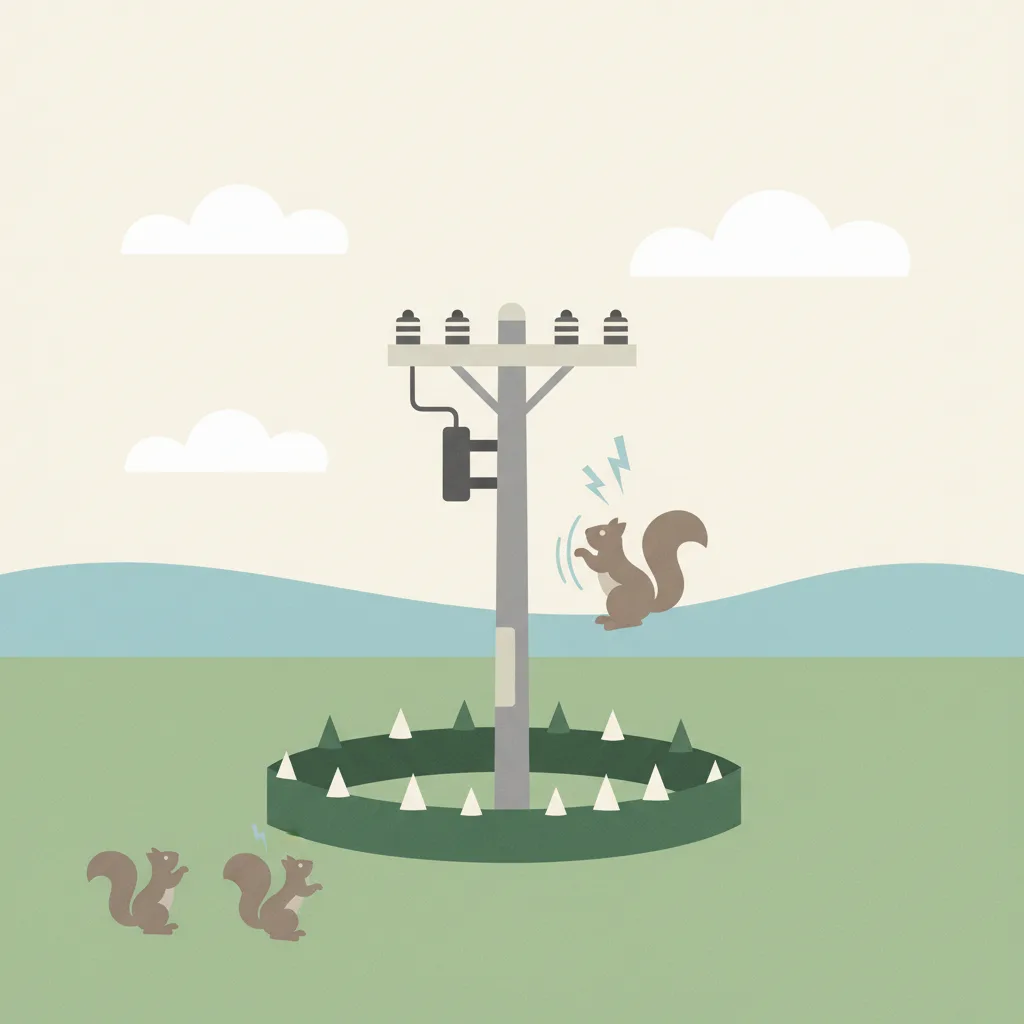
UK installs wildlife deterrent to combat squirrel-caused power outages
LEXINGTON, Ky. — The University of Kentucky has installed a specialized wildlife deterrent fence at one of its electrical substations to address a growing problem: animals causing campus power outages.
About a third of the campus's power outages over the past five years have been linked to squirrels entering substations and contacting energized equipment, according to UK Facilities Management. While outages average about three per year, their impact can be significant, disrupting academic operations, research, healthcare, residential and athletic facilities.
"Squirrel outages are on the rise," said Jacob Badstibner, utilities systems engineer associate who led the project. "When an outage occurs, our high voltage crew reacts immediately to restore power. If we can prevent squirrels from causing outages, we can prevent roughly a third of power outages on campus."
The new fence system safely discourages squirrels, rabbits, opossums, raccoons and snakes from entering the area. Steven Hughes, utilities systems manager, called the solution "virtually 100% effective" for a relatively low cost at UK's most vulnerable substation. Prior attempts to address the problem were too expensive, disruptive or ineffective.
The wildlife-related power outage problem is not unique to UK. Across North America, squirrels cause tens of thousands of animal-related outages annually, with peak activity occurring in spring and fall months. Research indicates that wildlife ranks second only to stormy weather as a major cause of power failures.
Badstibner's path to leading the project is notable. He joined UK's Utilities and Energy Management team as a student employee in September 2024 while pursuing an electrical engineering degree at the UK Stanley and Karen Pigman College of Engineering. His initial task was researching how squirrel outages occurred and developing potential solutions. After graduation, he transitioned to a full-time position in August 2025.
"I wanted to work in a high voltage field before graduation to see what the work was like," Badstibner said. "This job gave me the chance to learn directly from experienced engineers and really understand how these systems function. It's cool to know that you are working behind the scenes to keep campus running."
The project highlights career opportunities in facilities management and demonstrates how addressing infrastructure challenges can be accomplished through student-led research and collaborative problem-solving.