Twenty people came to tell the Council what they think of Flock. Seventeen said cancel it, and one Council member said she would have voted no.
Twenty people stood at the podium of the Lexington-Fayette Urban County Council on Thursday night to talk about Flock Safety's license plate readers. Seventeen asked the Council to cancel the contract. Three asked it to keep the cameras. And before any of them spoke, one Council member did something no colleague has done in public this year, as far as The Lexington Times can find: she said she would have voted no.
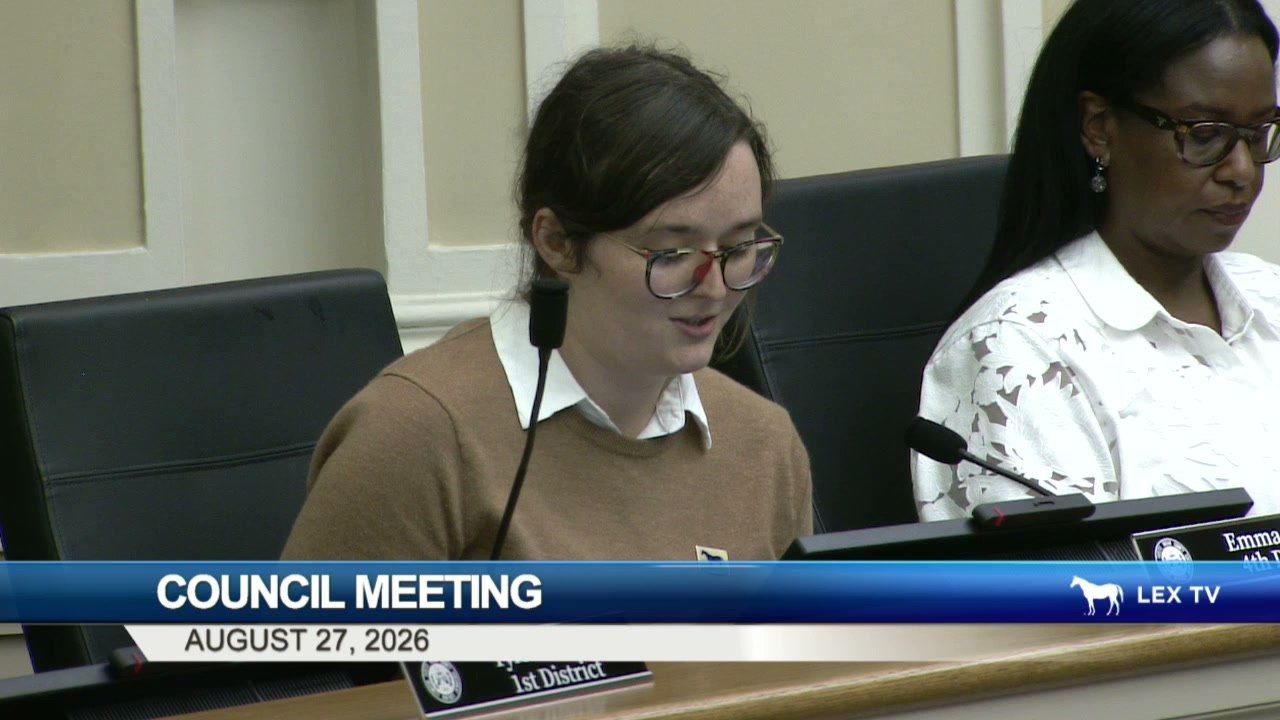
“I want to be very clear,” 4th District Council member Emma Curtis said during council announcements, just before public comment opened. “I do not believe that our police department or public safety personnel have pursued the utilization of these technologies maliciously, nor do I believe that they have misused them thus far.” But, she went on, “I believe, based on all of the information that I have seen, both prior and during my time in office, that Flock is not a corporation that acts in good faith or is worthy of our collective trust.”
The cameras were not on the agenda and nothing was voted on. The meeting, which ran past 9:30 p.m., adjourned without any other member responding. The comment period was the first test of a campaign Bluegrass DSA launched this month to push the city out of a five-year, $1.6 million agreement that runs to 2029 — an agreement whose master services contract, as The Lexington Times reported Tuesday, lets the city walk away on 30 days' notice for non-appropriation, without penalty.
What follows is a record of what was said, in the order it was said, checked where possible against the public record. The full video is on the city's Granicus archive; each speaker's name below links to the moment they took the podium.
The Council member who went first
Curtis, who took office in January 2025, said she was not on the Council for the 2022 pilot approval or the 2024 extension. “Had I been, I would have voted against their approval.”
She named three reasons: reported abuse by officers in other jurisdictions, the use of plate-reader data to enforce abortion restrictions in other states, and the U.S. Supreme Court's June decision that she said requires a warrant “to collect sprawling digital location history.” (The case is Chatrie v. United States, decided June 29; it concerned cellphone location records, not plate readers, and several speakers cited it Thursday as if it reached both.)
“I also have to lead in my role as a Council member in such a way that I still recognize myself in the mirror at the end of the day,” Curtis said. She closed with a request to the other 14 people on the dais: “Colleagues, please do not dismiss them out of the desire to avoid a politically inconvenient conversation. Let's face this issue head on and give it the attention it deserves.”
No one else offered a council announcement. Mayor Linda Gorton moved to public comment.
The letter
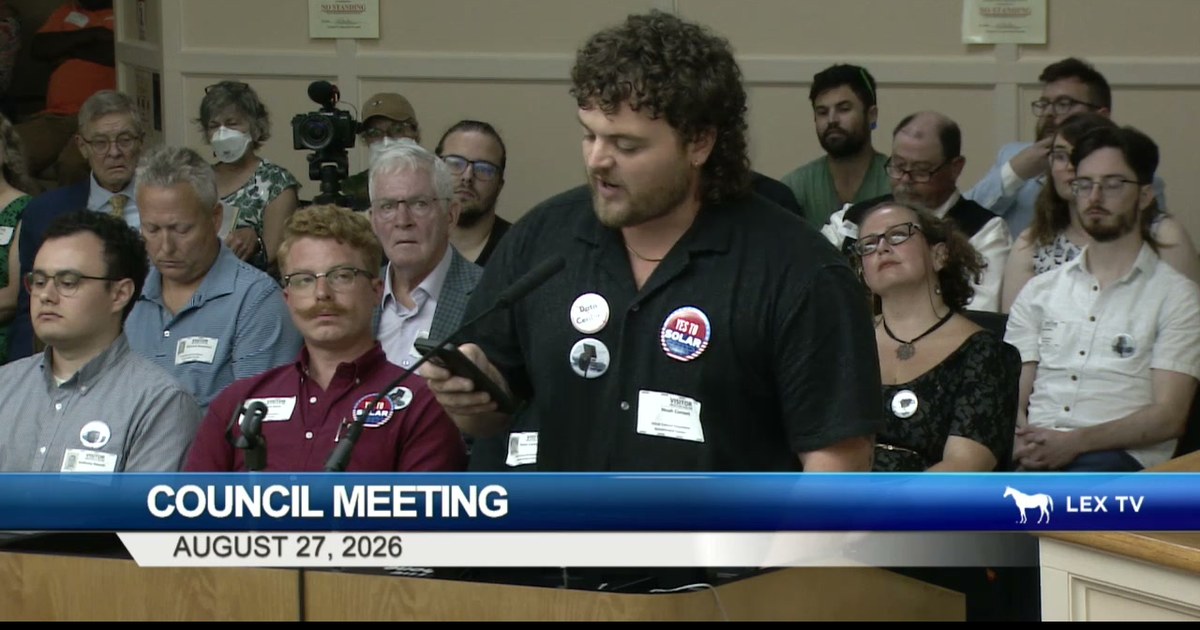
Noah Cornett, of District 2, speaking for the Bluegrass chapter of the Democratic Socialists of America, read the chapter's seven-point letter into the record: cancel the contract, commit to no future ALPR contracts, remove every camera within six months, delete the data, and require a warrant before the city builds or uses technology that builds a surveillance profile on any individual. The chapter, he said, is “now over 350 strong” and voted unanimously in May to bring the issue to the Council.
Then he set the letter down. “I would urge the Council to look out in the crowd,” he said. “These are the residents of the districts you represent. These are residents that are currently under 24/7 investigation that never ends.”
Cornett cited the case that has driven much of the week's attention: a Shively police officer, Asad Zahir, arrested Tuesday on charges that he ran 2,048 Flock searches in four months on two vehicles belonging to the mother of his child. He also made the night's most specific local allegation — that “twice in April, our very own city” sent Flock data to U.S. Immigration and Customs Enforcement. At the time, The Lexington Times could not confirm that. None of the 27 audits Lexington police have published mentions a federal immigration query.
Update, Aug. 28: The claim checks out. Flock network audit logs released by six agencies in Ohio, Georgia, Missouri, New York and Alabama, collected by haveibeenflocked.com, record two Lexington police searches on Saturday, April 18, 2026, each with the typed reason “Other - agency assist (ICE)” and each spanning 2,081 camera networks. The officer’s name and the case number were withheld by the releasing agencies, so the records do not show whether the request was a criminal investigation or a civil immigration matter. The Times has put questions to the Lexington Police Department and will report on the records in full.
“So now all of you on Council have a choice,” Cornett finished. “To stand with your constituents on the right side of history, or to stand with an unelected, unregulated, Fourth Amendment-violating, Peter Thiel-funded startup.” The gallery applauded. Gorton stopped it: “The Council rules prohibit any kind of clapping or booing. I'll have to stop the public hearing if you want to do that.” It did not happen again.
The case against, in their words
The next two and a half hours were not one argument but several. Grouped by theme:
The readers get plates wrong
Herbert Lynn, a 7th District resident who said he was speaking as a private citizen (he is a candidate for an at-large Council seat this November), walked through the misread cases that have made national news: a Toledo man attacked by a police dog after his truck was flagged as a stolen car; a couple pulled over with a six-week-old in the back seat “because an O was misread as a zero”; children in Colorado made to lie face down on hot asphalt because a stolen-vehicle report listed a motorcycle; a Florida woman jailed for two weeks in a hit-and-run “even though reports pointed to a maroon Dodge Durango” and hers was black. Each of those four is a documented case — Brandon Upchurch in Toledo, Brittany Gilliam in Aurora, Lindsey Isaacs in Volusia County — though the “O for zero” detail did not check out against the published accounts.
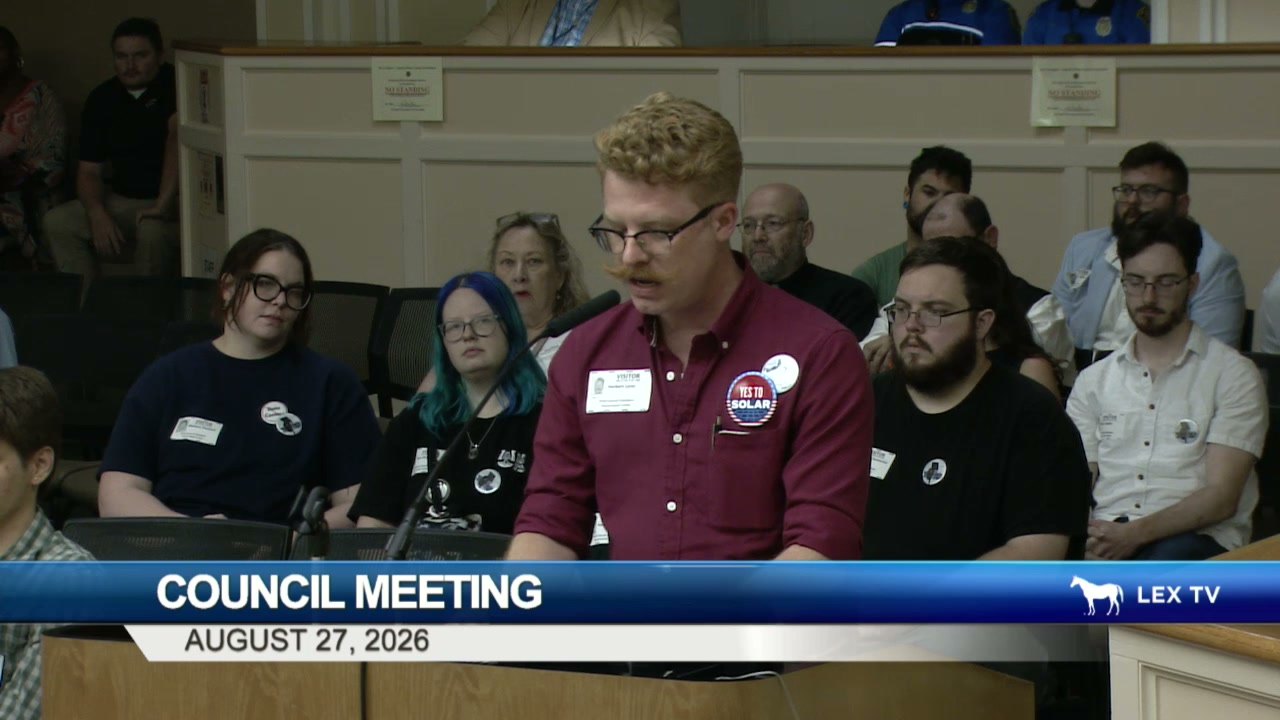
He cited a California police department's internal review that found “71% of the alerts” were misread plates. That figure is real: Roseville, California, police found 71 percent of 1,427 Flock alerts involved a misread. “You're better off flipping a coin,” Lynn said. “Lexington is using the same equipment and the same software as the other cities throughout the nation. They likely have a similar false positive rate.” He said he had found “no published data on the accuracy of Flock camera systems” in Lexington. “If you spend $150,000 on a new boiler — I know this from where I work — you need to have the state inspectors put a stamp on it. $1.5 million for the police and the City Council has not deemed that necessary?”
Susan Rahimzada, who said she lives in Richmond but spends time in Lexington, cited the other California figure in circulation — 37 percent of alerts misread, from a Vallejo police study — and the Milwaukee woman pulled over at gunpoint for a homicide she had nothing to do with, who says she lost her job over it. She added an argument no one else made: the camera poles themselves. “I have never seen a Flock camera that has a breakaway on it,” she said, demonstrating with a pen how a slip plate lets a lamp post fold when a car hits it. “If this company truly cared about safety over profit alone, breakaways are a measure that they would consider implementing.”
The officers who use them
Luke Allen, who said he was born in Lexington and lives in Frankfort, built his remarks on The Washington Post's Aug. 2 investigation, which counted more than 50 officers accused or charged with misusing plate-reader data in two years, most of them tracking ex-partners. He listed a Louisiana deputy, a Georgia police chief, an Illinois chief who tracked three ex-girlfriends, a Milwaukee officer, and “right over in Louisville last year, an officer who previously narrowly was off the hook for shooting a citizen without warning” indicted for stalking an ex.
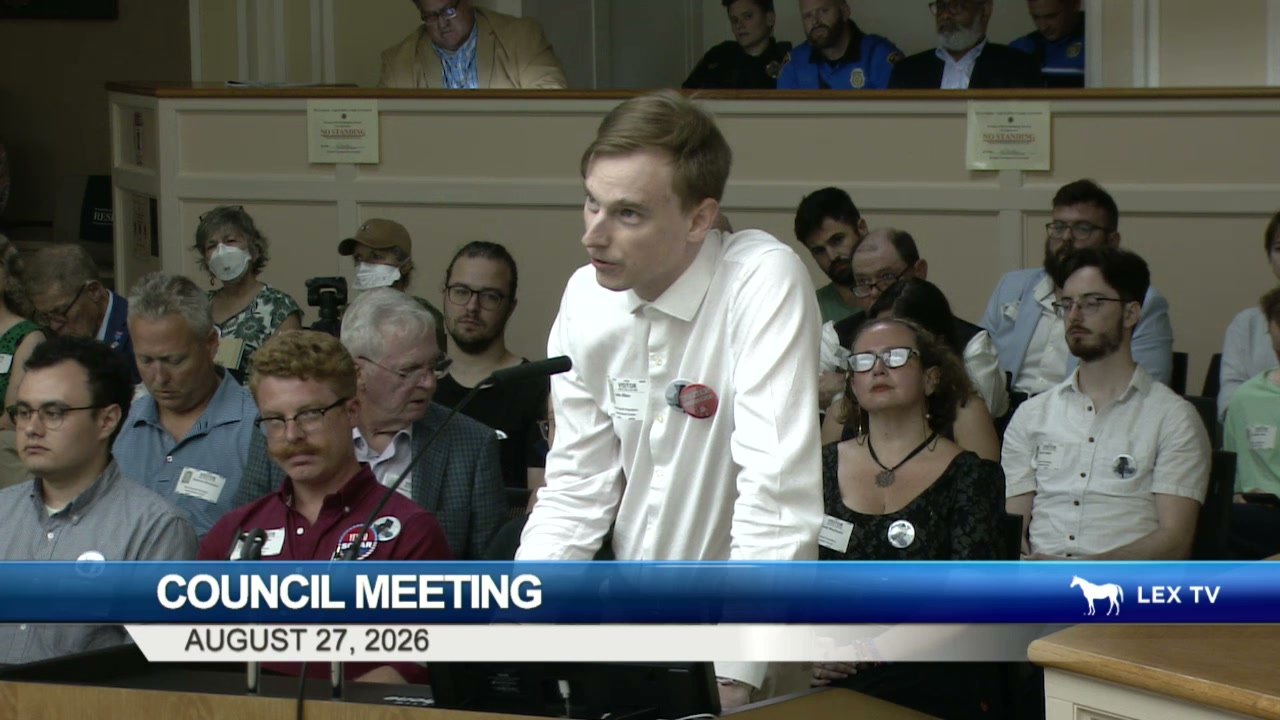
“Can we really believe that not a single one of these 650 ordinary mortal men and women will ever be tempted, at the worst and most painful time of their lives, to do the wrong thing?” Allen asked. He quoted Flock's chief executive, Garrett Langley, from the Post: “We're not going to change humans, and humans make bad decisions.” Allen's reading: “What we're actually hearing from Flock is that they've concluded … that there's nothing that you can do to stop these crimes from happening.” But, he said, “there is a way to stop it, which is that councils like this one, like the one in Cynthiana, around the country, can withdraw all these means to do the wrong thing at any time.”
Caitlin Adams, of District 1, said she had watched LEX 18's report that morning on the Shively case — the officer “searched for her over 2,000 times and only got caught months later, well after the damage had been done, after a protective order had been issued against him.” (Court records put 241 of those searches inside the period an Indiana protective order was in force.) “It is difficult to think the cameras are keeping people safe when I know the data can and will be used against citizens, even if they're just driving.”
William Osborne, of District 10, who said he spent seven years working in politics “from city council to U.S. Senate” and now works at a wealth management firm, put it as a choice: “Do we want to be a city that puts the main focus on recovering stolen vehicles, or do we want to put the focus on protecting the ex-partners of those who have access to Flock cameras? This is not some far-away thing. This happened in Shively, Kentucky.”
The company
Mel Moser, of the 9th District, said he had submitted a sourced document to the Council and would confine himself to one subject: security. He described a November 2025 analysis by an independent researcher — Jon Gaines of GainSec — that produced 22 catalogued vulnerabilities, including that the cameras run Android Things 8, “a platform long past the end of life and unsupported by the vendor.” He quoted Flock's written response that it had “not, at this time, determined a need to remediate devices currently deployed.” “So, in other words,” Moser said, “we are not going to do anything about this. We are going to do it on our schedule.”
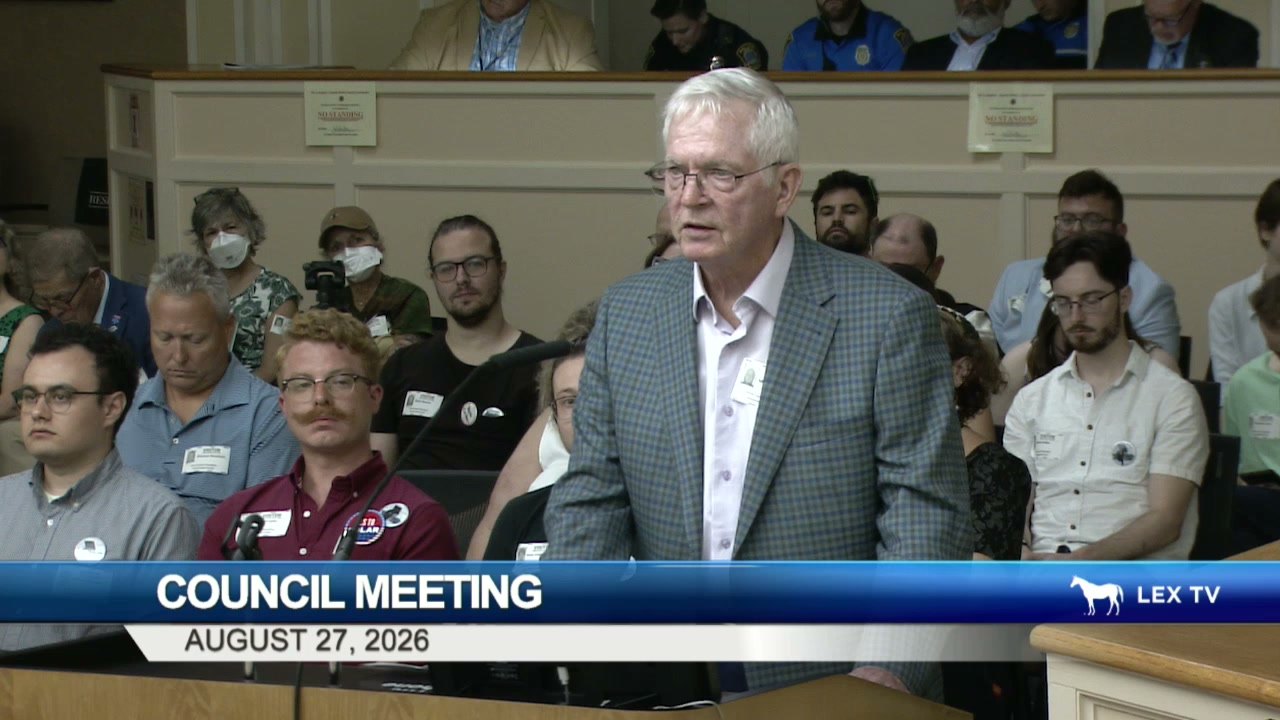
He read from the February letter Sen. Ron Wyden and Rep. Raja Krishnamoorthi sent the Federal Trade Commission: “Flock's cavalier attitude toward cybersecurity needlessly exposes Americans to the threat of hackers and foreign spies.” And he read the line nine Denver City Council members wrote last October: “We do not believe the city and county of Denver should continue doing business with a company that has demonstrated such disregard for honesty and accountability.” Cynthiana's mayor, he noted, said last week that “because of company policies and enlightening information, the city is uncomfortable to move forward with Flock.”
Katherine Shinners, of District 6, who said she spent years in Silicon Valley, focused on what the product is becoming. She cited a Wired report on a new Flock offering that bundles 69 prewritten AI searches — “one preloaded search will find witnesses by listing cars most seen in the neighborhood.” Her remarks were a list of questions: Has the city validated Flock's reliability claims with an independent third party? What are the metrics? Has the Council conferred with city attorneys about liability if an inaccurate hit leads to a wrongful stop? “This is not simply a new tool for law enforcement,” she said. “It is a new level of surveillance infrastructure.”
Dylan Bourne, of District 1, took on the “no reasonable expectation of privacy in public” argument. “If everyone speaking on this issue tonight went outside, stood on a street corner, took pictures of cars and documented their license plates, I would imagine you and probably Lex PD would have a problem with that. It's weird.” Then the business model: “What about five software updates from now, when Flock Safety sales are down and they need to turn a profit to pay Andreessen Horowitz back?”
Shannon Denniston, of Mt. Sterling, listed the cities that have walked away — Los Angeles, whose mayor urged its police department this month to drop Flock; Austin; Oshkosh, Wisconsin, which rescinded a contract in April after a Flock representative told its council the system could not produce heat maps and the police chief said he had seen them. She cited Sen. Josh Hawley's investigation, opened Wednesday. “Lexington has 125 Flock license plate readers watching our roads,” she said. “These cameras do not merely look for stolen cars. They feed vehicle movements into a nationwide searchable surveillance system.”
The money, and the missing numbers
Paige Hensley, of District 4, had spoken in April and returned with a follow-up. Then, she said, the city's license plate reader page looked as if it had last been edited in November 2022. Since then: one new example of what an alert looks like, dated June 2026, and otherwise “the same as in April, with typos that have not been corrected.” The page's before-and-after comparison, she said, sets twelve months of pre-Flock data against eight months of post-Flock data, and its line chart still ends in February 2022 — “meaning it is exclusively pre-Flock data.”
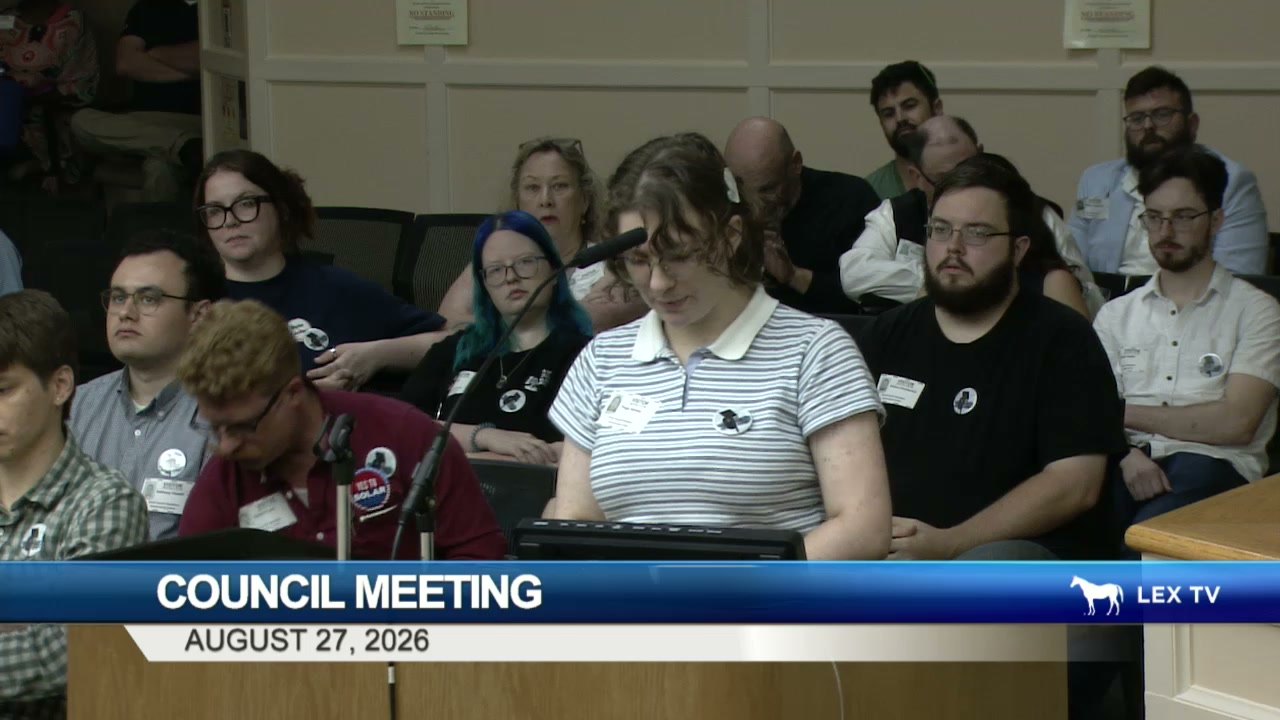
The statistics section, she said, reports 370 stolen vehicles recovered since March 2022. “Meanwhile, there have been at least 476 incidents of stolen vehicles in the first six months of 2026 alone, and 3,788 since the first Flock cameras were installed, according to the city's own NIBRS data linked on the same page.” Her ask was narrow: “If the data shows it does work, you need to release the data. If you can't release the data, then I would recommend that the Council move to terminate the contract.”
Corey Edwards, of District 5, traced the program's growth — 25 free pilot cameras in 2022, a request for 75 more within four months, 100 approved by that December, and now a five-year contract. He pointed to Atlanta, Flock's home market, where a recent analysis of police clearance data found rates falling for most crimes over 2021–2025 and motor-vehicle theft clearance up three-tenths of a point. “We don't even have data from before and after the cameras were installed,” Edwards said of Lexington. He contrasted the Flock spend with the budget of ONE Lexington, the city's youth-violence office: “Her budget is 200K compared to cameras with no human elements.”
Pete Lynch, who teaches politics at the University of Kentucky and is running as an independent for the 6th Congressional District seat, split his three minutes between the data center ordinance and Flock. On the cameras, he said the city would end up spending about $2 million on Flock over five years. “Lexington taxpayers should not have to subsidize an out-of-state corporation that spies on us.” He asked for three things — 30 days' notice to Flock, a rule that any future surveillance tool needs a public hearing and Council approval, and a ban on police buying data from corporations without a warrant.
Drew Hansen, of District 1, said he had learned about Flock only a couple of months ago. “I was certain my community, Lexington, Kentucky, would never allow something like this in our town. I guess I was wrong.” He cited the Institute for Justice's database of more than 100 documented misuses and said the $1.6 million “should be used for something more beneficial, like Lexington's failing infrastructure.”
The longer view
Clay Davis, who introduced himself as director of We See You Watching Lexington (its website lists him as outreach director) and a District 8 resident, has been at this longer than anyone in the room. “Nine years ago, well before the deployment of Flock cameras, my organization predicted that this is exactly where Lexington would end up,” he said. His group proposed a surveillance-oversight ordinance then; the Council took no action. “Had the Council taken us seriously nearly a decade ago, it is highly probable much of the uproar you are contending with today could have been avoided.”
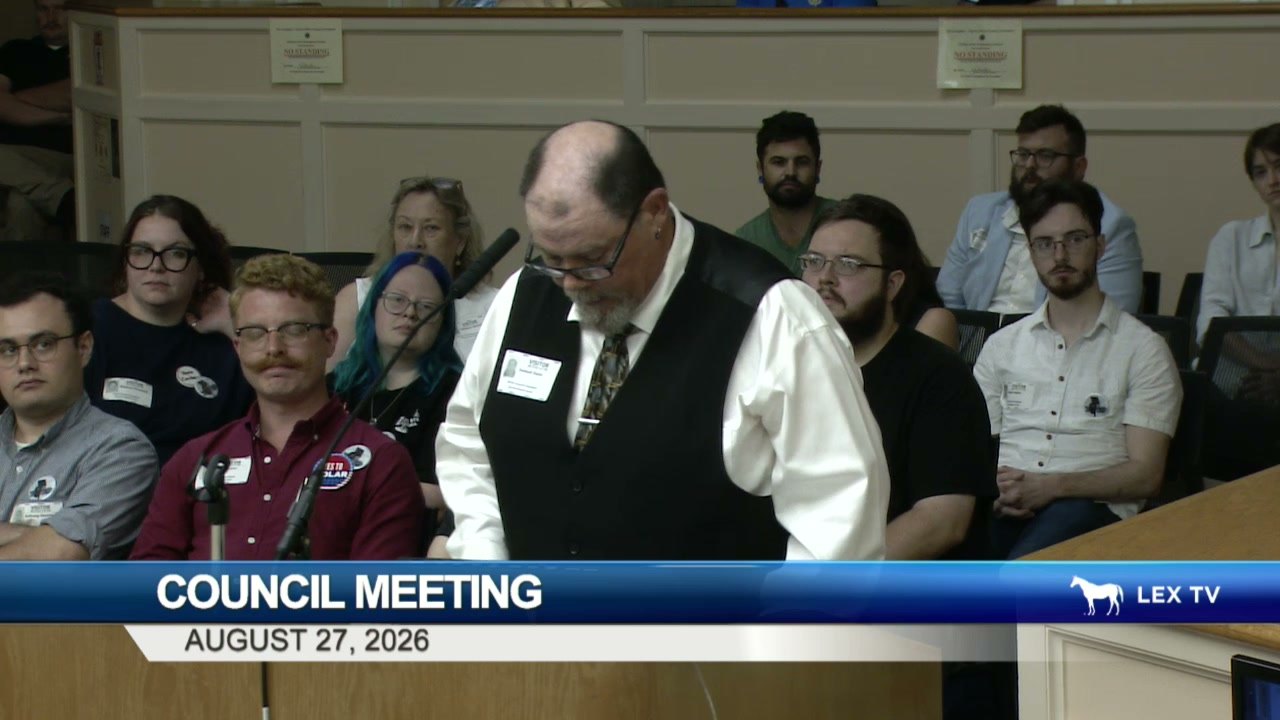
Davis said he had resubmitted the ordinance to every member. He also said the room in front of the Council was unusual: “Republicans, Democrats, libertarians, democratic socialists, greens and independents standing shoulder to shoulder to oppose an action this governing body has taken. That kind of unity is rare in this current arena.” He was not shy about what he wanted. “I want them gone. I intend to be a huge pain in your backsides until they are.” If the Council would not remove the cameras, he said, “at a minimum the community deserves an ordinance that makes the city's surveillance decisions transparent, evidence-based and community-informed.”
Hudson Chamberlain, of District 8, a Bluegrass DSA member and an organizer with No AI in KY, which is fighting data centers in Lexington, addressed what he called the “support vacuum” police supporters warn would follow a cancellation. “Nearly 100 local governments, ranging from barely incorporated to some of the largest in the nation, have canceled their contracts,” he said — a count that tracks with the DeFlock tally of more than 90 cancellations, rejections and deactivations. “If so many officers across the nation deny themselves the access and still serve their community in a safe, supported way, what's stopping LPD?”
Trevor Knutson, of District 3, asked the Council to think past the next election. “This is a road that leads directly to a very bad place,” he said. “It's not going to jump right there. It's going to go in incremental changes … like frogs boiling in a pot.” Competition among vendors, he argued, guarantees escalation: “They will try to get bigger bids and compete with companies doing the same thing to provide more technology, deeper, more penetrating capabilities, and that will be a race to the bottom.”
The case for
Three speakers defended the program, and all three spoke from the East End.
Billie Mallory of District 1, who directs the East End Community Development Corp., said she was in the room when the prior Council first considered the cameras. “At that time, we had the highest homicide rate in all of Lexington, and many of those were teenagers. Teen-on-teen violence. And many of those went unsolved.” Since then, she said, crime in the East End “has gone down significantly,” and recent crimes have been solved quickly through the Real Time Intelligence Center. “I know that in times past, many of our elderly were afraid to sit on their porch. Our families could not let their families play in the front yard or the backyard, because you never knew which direction a bullet was coming from. That's the reality that people were living with.” She added that the cameras were only part of it: “We have neighborhood police officers who actually know us. We actually know them by name.”
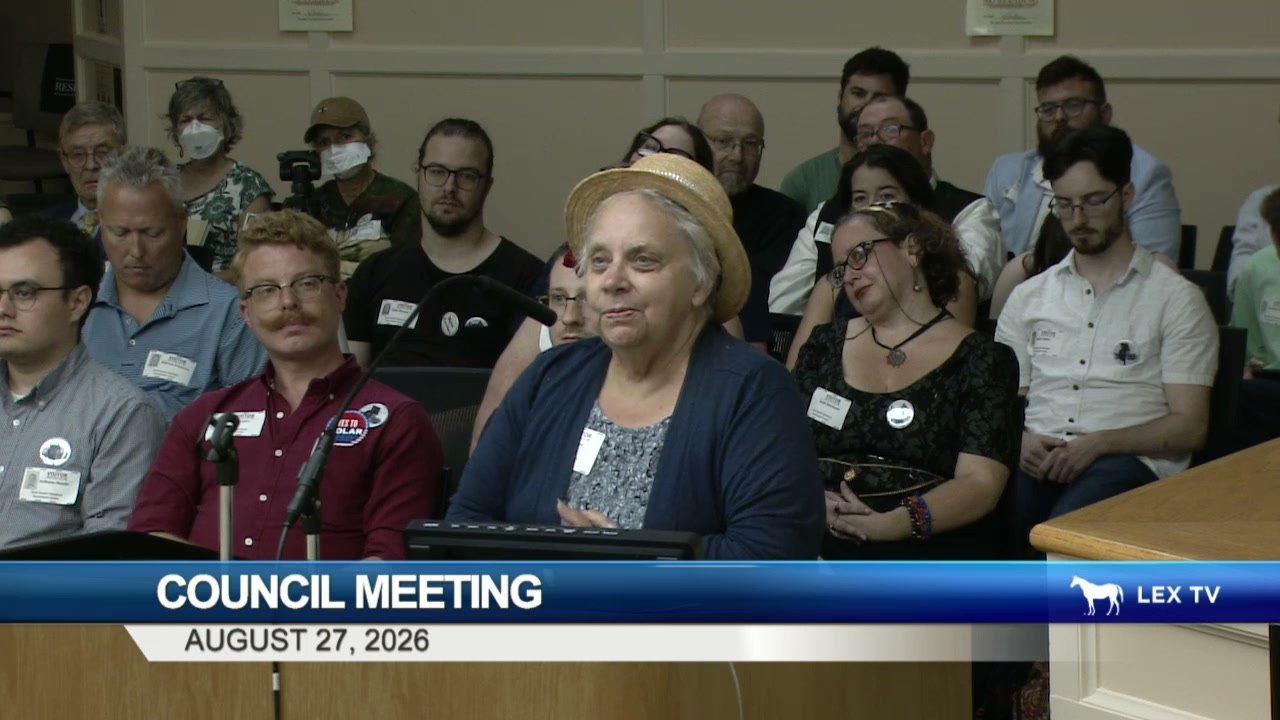
Lisa Guess, a District 1 resident and president of the Lexington Community Police Academy Alumni Association, said plate readers “have repeatedly helped solve violent crime, recover stolen vehicles and, most importantly, bring missing people home.” She said her trust in the department “is not blind. It is built on years of interaction, observation, education and partnership,” and that misuse elsewhere “should not define Lexington or the police department. The Lexington Police Department should be judged by its own record.” Here, she said, “the technology operates within a policy framework developed with community partners, and its use is regularly audited.” (The Times reviewed those audits this week: every one was conducted inside the department, and the independent Public Integrity Unit's sample has been a flat 60 entries a quarter since mid-2025.)
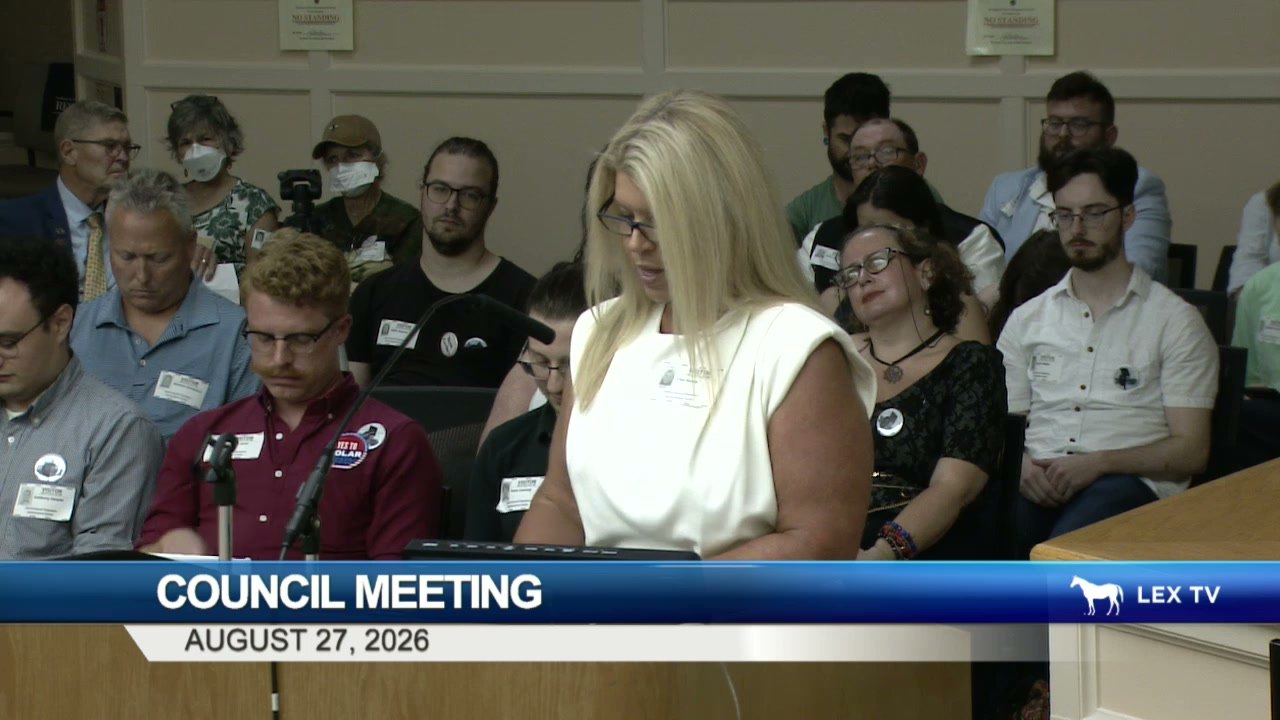
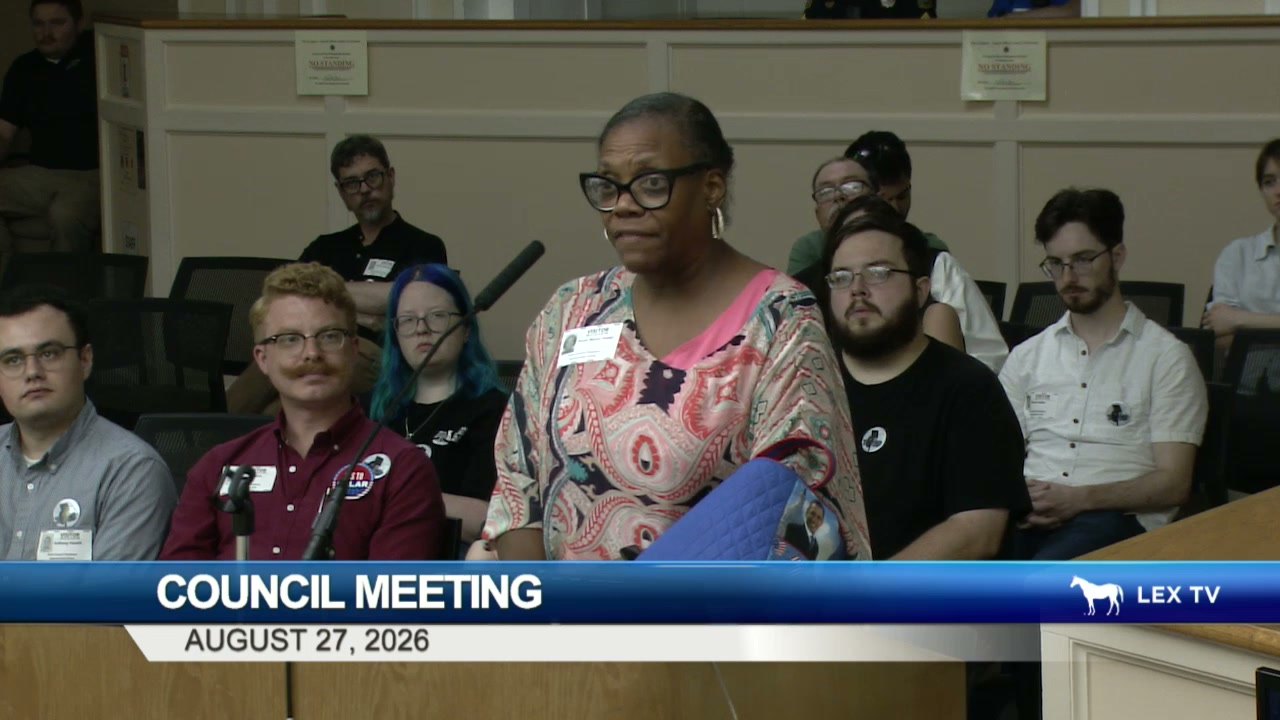
Vivian Hodge, vice president of the William Wells Brown Neighborhood Association, read a letter of support the association wrote on April 8, 2024, after its officers toured the surveillance room and police attended a neighborhood meeting. “The neighbors agreed, because the East End was one of the high-crime areas in the First District, we wanted to support the installation of Flock cameras and are open to receive more.” The letter, she said, “is still very representative of the neighbors' desires today. And who better to speak on the needs of the East End than the East End?”
What did not happen
No Council member other than Curtis spoke to the issue. No one moved to place it on a committee agenda. Under Council rules, public comment on items not on the agenda comes at the end of the meeting and does not carry a response from the dais, and none came.
The 21st and last speaker of the night, Deborah Nelson of District 3, had come about something else entirely — to thank traffic engineering for the city's new mini roundabout at Wilson Downing Road and Belleau Wood Drive, in her Glendover neighborhood. “Thank you for responding to community concerns, using data, consulting research and making good use of our tax dollars,” she said. No one clapped, and no one needed to be told not to.
The Council's next regular meeting is Thursday, Sept. 10. The Flock contract's non-appropriation clause remains where it was: Section 11.16 of the master services agreement, 30 days' written notice, no penalty.
This report is based on the LexTV recording of the Aug. 27, 2026, Urban County Council meeting, including the closed-caption track and an independent transcription of the public comment period. Speakers' names are as read into the record by the clerk and as the speakers gave them; where a spelling could not be confirmed against a public record, it is rendered as heard. External claims made at the podium were checked against the sources linked in the text; where a claim could not be verified, the story says so. The Lexington Times has asked Bluegrass DSA for the basis of its statement about immigration-enforcement data sharing and will update this story if it responds.
Sources
- LFUCG Granicus — Urban County Council, Aug. 27, 2026 (public comment begins ~1:52:30)
- Bluegrass DSA — DeFlock demand letter (PDF)
- Flock Safety master services agreement, LFUCG Contract #094-2024 (§11.16)
- City of Lexington — License plate readers page
- Supreme Court — Chatrie v. United States (June 29, 2026)
- Kentucky General Assembly — HB 58 (2026 RS), ALPR privacy law
- Louisville Public Media — Shively officer arrested over 2,048 Flock searches (Aug. 26, 2026)
- The Washington Post — How police officers used a vast network of cameras to spy on their exes (Aug. 2, 2026)
- WKYT — Cynthiana to end use of Flock cameras (Aug. 21, 2026)
- Denverite — Denver City Council members oppose Flock extension (Oct. 29, 2025)
- The Record — Wyden, Krishnamoorthi letter to FTC on Flock cybersecurity
- Gizmodo/Wired — Flock's new AI investigation tool and its 69 prewritten prompts
- The Hill — Hawley opens investigation into Flock Safety (Aug. 26, 2026)
- The Washington Post — L.A. mayor urges LAPD to end Flock relationship (Aug. 7, 2026)
- Atlanta Community Press Collective — Flock cameras and Atlanta clearance rates (July 28, 2026)
- Techdirt — Roseville, Calif., review: 71% of Flock alerts misread (Aug. 6, 2026)
- Scripps News — Milwaukee woman's gunpoint stop after Flock database error
- Institute for Justice — Database of ALPR abuse
- WBAY — Oshkosh council rescinds Flock contract (April 23, 2026)
- The Hill — Flock contract cancellations grow (Aug. 2026)
- Louisville Public Media — Louisville police data reached immigration dragnet (Nov. 3, 2025)
- We See You Watching Lexington
- LEX 18 — Lexington residents push back on Flock camera system at city council open comment
- The Lexington Times — Flock opponents plan to fill Council chambers Thursday (Aug. 25, 2026)
- The Lexington Times — Lexington police have run more than 400,000 Flock searches (Aug. 26, 2026)
- The Lexington Times — Lexington posts a map of its license-plate cameras (July 13, 2026)