The Glaze: Nachie Braga, the man who turned Lexington's broken places into a food forest
The Glaze is a Lexington Times column highlighting people who quietly do the unsexy civic work that makes this city function. This week: the permaculturalist who spent six years going to advisory boards nobody else wanted to attend, and then planted Kentucky's largest public food forest on a Cardinal Valley floodplain the city had given up on.
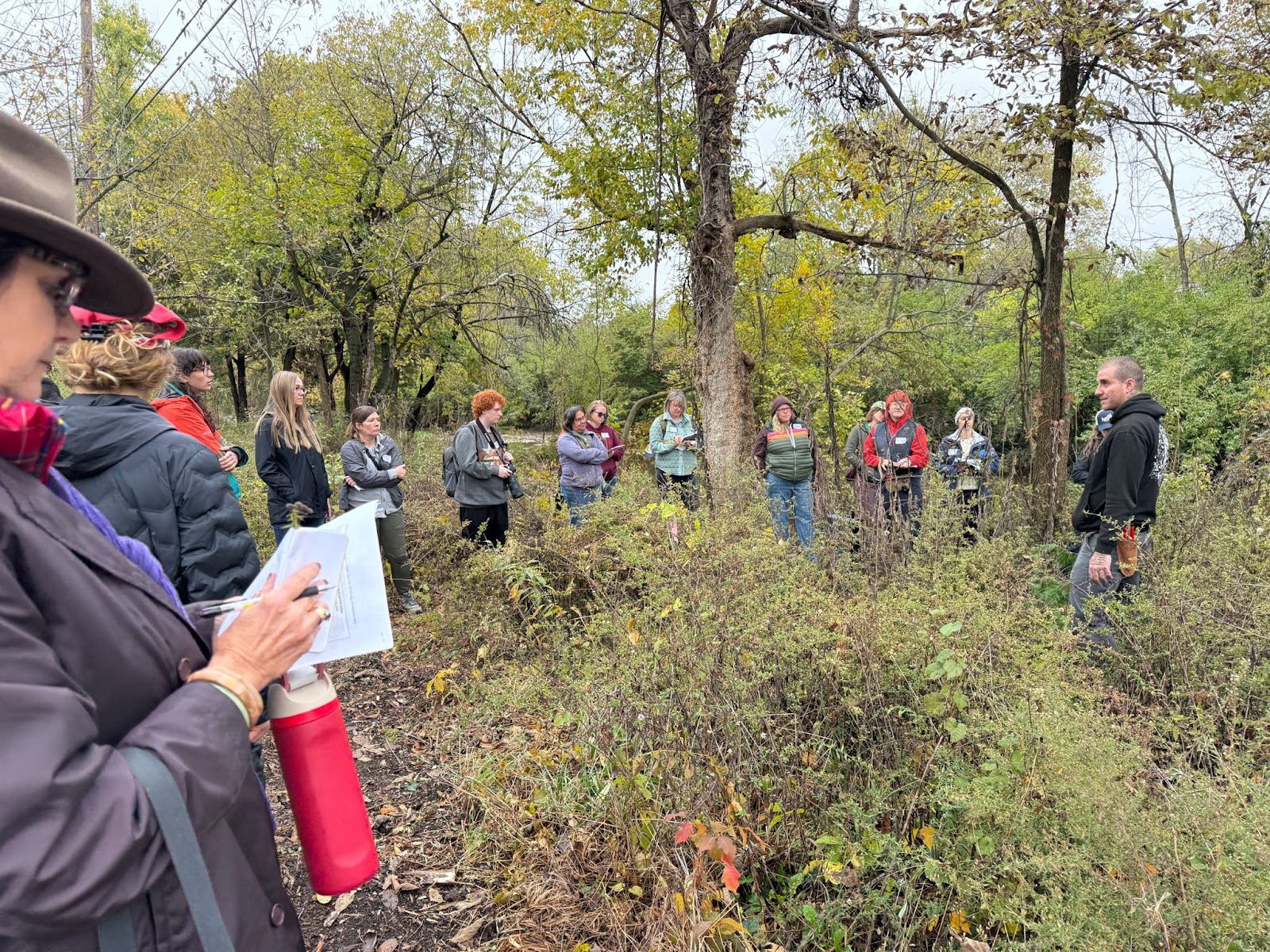
On a gray October afternoon in 2025, in a three-acre patch of Cardinal Valley where the houses on Kilrush Drive used to stand before the city demolished them, a couple dozen strangers gathered in a rough circle in the herbaceous overgrowth. Leandro "Nachie" Braga — wide-brim cap, hand gestures, soil knife on his belt — was pointing out a Jerusalem artichoke and explaining what a "Three Cousins" planting is. It's an Appalachian adaptation of the Three Sisters: Jerusalem artichoke, American groundnut, wild mint. "It's important for all of Lexington," he told the group, "for the whole continent really, that we take spaces like this and try to restore some ecological function to them."
He has been at this patch since 2020. The thing he was standing on is now the largest public food forest in Kentucky.
Nachie founded Geomancer Permaculture in 2019. His LinkedIn calls him "Head Thaumaturge" — a thaumaturge being a worker of wonders, which is roughly accurate. In 2022 his three-year-old business won two awards in one fall: the Kentucky Association for Environmental Education's Outstanding Business in Environmental Education, and the Kentucky Department of Environmental Protection's Community Environmental Luminary. The awards aren't the interesting part. The interesting part is that long before the city was paying Geomancer to do anything, Nachie was the guy showing up to the Water Quality Fees Board, to the Stormwater Stakeholder Advisory Committee, to the Planning Commission — speaking as a private citizen, on his own time, about the urban water cycle.
The civic work came first. The contracts came after, because by the time the city was ready to pay someone, he had already proven he was the most reliable shovel in the room.
Starting at the spring
Nachie was already doing this work before he had an LLC. In 2017, while enrolled in the city's Community Environmental Academy — a four-month residents' program that ends with a $1,500 graduate-project grant — he picked stormwater drainage around the Blue Hole Spring at McConnell Springs Park as his project. The spring was getting hammered by uphill runoff. His fix was a large infiltration basin across from the spring, with the excavated soil used to build a berm that shielded the spring itself. The City of Lexington gave him an Environmental Award for it in 2018.
He went back. By his own count, since then he has planted hundreds of perennials and trees around the same park, and the property logged its first documented mink sighting after his work.
That was the resume Geomancer was built on.
Showing up to the meetings nobody else attends
He founded the company in 2019. By the time the KAEE award came in November 2022, he had already broken ground on a rain and pollinator garden at Beaumont Middle School, was running a free fruit-tree program for Cardinal Valley residents, and had just started clearing invasives at a vacant city greenway he had his eye on.
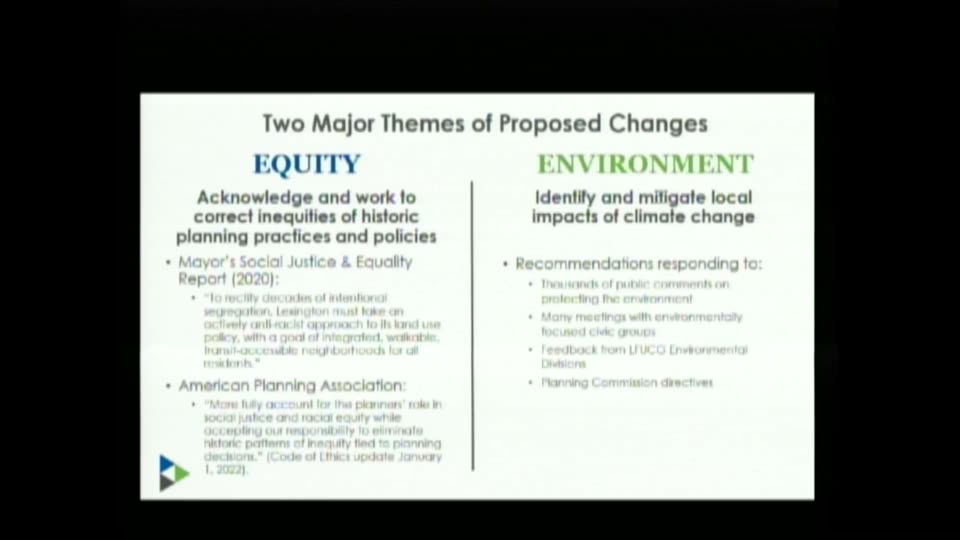
Then he developed a different kind of habit. On Feb. 16, 2023, at the Planning Commission's public hearing on the 2045 Comprehensive Plan goals and objectives, the agenda lists Nachie Braga signing in as a private citizen — not on Geomancer's letterhead — on the record about "conserving the urban water cycle in Fayette County." Two weeks earlier and two weeks later he was at the Water Quality Fees Board, pressing for native-tree-canopy incentives the board would eventually approve unanimously.
In March 2024 the Stormwater Stakeholder Advisory Committee heard an update on educational grants funded through Bluegrass Greensource. Rachel Patton, the environmental educator running them, noted offhand that she had been "really excited to partner with Nachie from Geomancer Permaculture to do a really awesome tree walk at Julius Marks Elementary, where they have their designated as an arboretum here in Lexington." Free programming, on his own time, for an elementary school he had no contractual relationship to. Around the same time he was appointed to the city's Infill and Redevelopment Steering Committee — another unpaid seat at the table.
This is the part of the resume that doesn't show up on the LLC.
Lex Grow Trees
Lexington's tree canopy is 25%. The goal is 30%. The city has grown that number by about 3% in the last 12 years.
In the summer of 2023, council allocated $1.5 million to bend the curve. The mechanism was a tree canopy ad hoc committee. Its co-chairs were Council Member Hannah LeGris and Nachie Braga, of Geomancer Permaculture. While the committee built out a longer-term Lex Grow Trees grant program, council approved $55,000 in near-term work that July to Trees Lexington and Geomancer. A $62,600 round followed in March 2024, splitting tree-care maintenance (Geomancer), tree planting (Seedleaf), and workforce training (Trees Lexington).
By April 2024, the same three orgs ran three pilot projects and put 389 trees in the ground. A parallel $150,000 private-property tree program planted 259 trees on 155 lots in council districts 1, 2, and 7 — the districts where the canopy gap is worst. A $250,000 USDA Urban Forest grant came in to scale the pilot to the rest of the city.
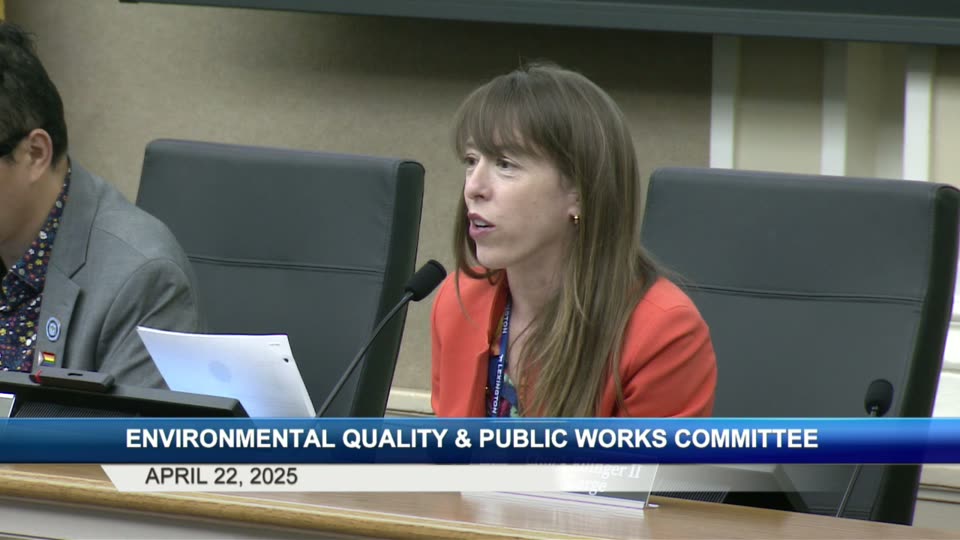
A year after launch, on April 22, 2025, LeGris recapped the committee's work to the Environmental Quality and Public Works Committee. "Thank you to Nachie Braga, who's here today," she said, before reading the rest of the council members and staff. Then Director Heather Wilson stood and walked the committee through the numbers, including a sentence Nachie had been telling advisory boards for five years: "Trees impact all of our environmental pieces of our health, including stormwater mitigation, heat island effects, lowering city temperatures."
Kilrush
The thing about Kilrush Drive is that it sits in a floodplain. The city tore down the houses for that reason. Wolf Run Creek runs along the east edge; underground sanitary sewer and above-ground utility lines run through the middle; New Circle Road borders the back. You couldn't put a permanent structure there if you wanted to. So for years the result was three acres of vacant lots and Amur honeysuckle.
Nachie started planting fruit trees there in 2020. The serious transformation began in 2023. By 2024 the design had a shape: cleared invasives, "cues to care" charismatic blooms planted in intentional rows so neighbors could read the space as tended (not abandoned), cut-log benches and climbing structures, dead hedges shielded behind stacked logs that doubled as "architectural features" — and mushroom cultivation in the logs themselves. Three Cousins plantings. Sochan (Rudbeckia laciniata) coming up for spring greens. Strawberries and green-and-gold as ground cover. Pawpaws, persimmons, plums, serviceberries.
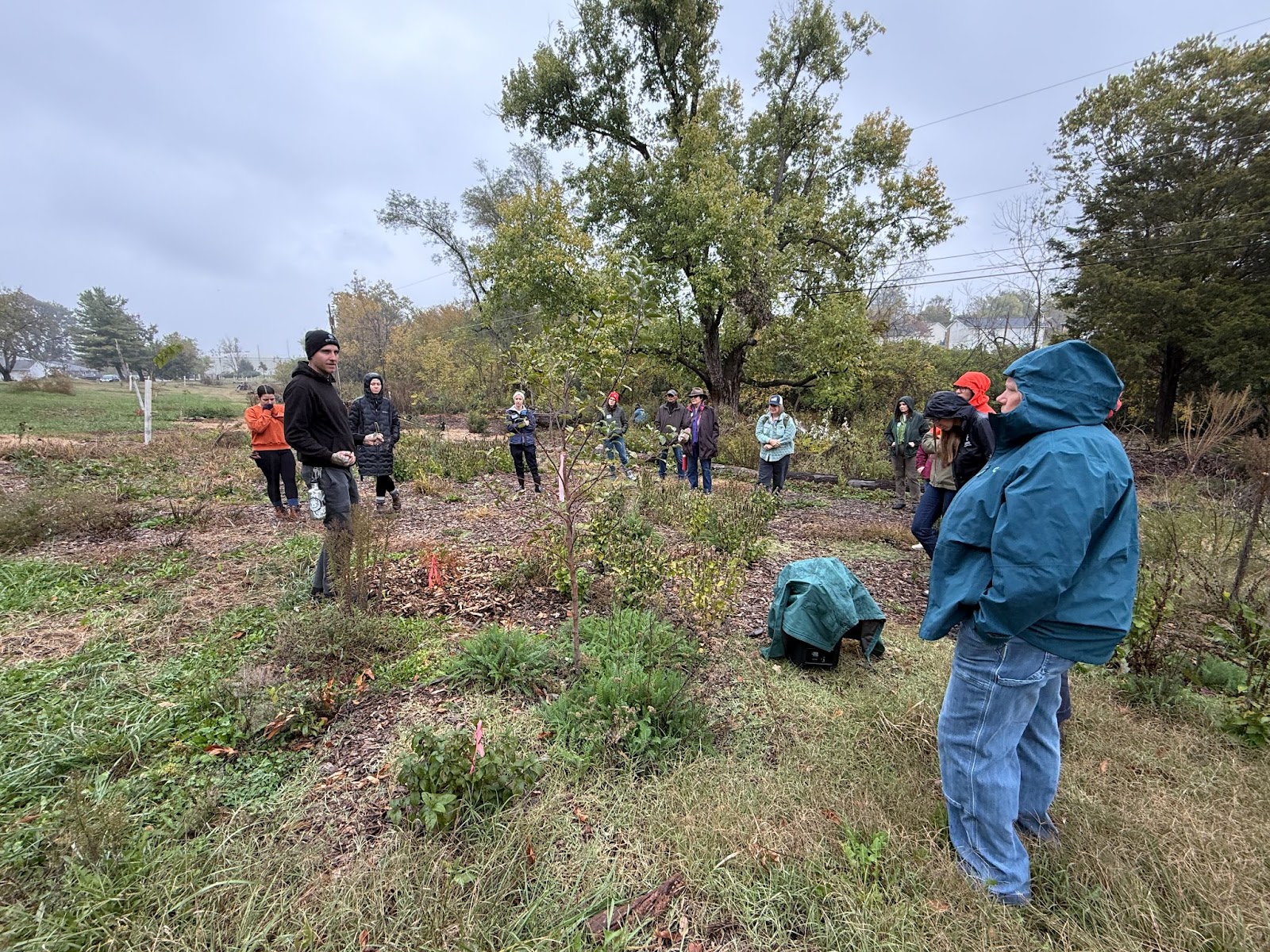
On Oct. 10, 2024, the Urban County Council passed Resolution 0926-24, appropriating $25,000 from council capital project funds to the Division of Environmental Services for the Kilrush Greenspace Food Forest Project. The vote was 10–0. By August 2025, Geomancer Permaculture was on the city's Greenway Maintenance contract roster. The neighbors are part of the project: in October's OAK Field Day, one of them — Reggie, who can see the whole greenspace from his front yard — told the field-day group that the food forest is starting to bring back the butterflies he remembered from his grandmother's house as a kid.
Nachie's next move is registering Kilrush as the first publicly-owned farm in Fayette County, which would make it eligible for federal NRCS cost-share programs. He told a Smiley Pete interviewer back in early 2023, before any of this had a council resolution number or a contract attached to it: "It will take at least five years for people to be able to look at it and say, 'Oh, I get it.'"
The city took five years to get it.
The big picture
Last September, at a Council Work Session right before Council Ag Day, Aaron Clark — the second-generation Fayette County farmer who chairs the Fayette County Conservation District — presented the District's annual report. He took a moment first to introduce his team in the gallery: the District director, a supervisor, and "community partner Nachie Braga, all here today in support."
The Conservation District, the city's tree canopy strategy, Lex Grow Trees, the Comp Plan environmental goals, the new food forest, the Greenway Maintenance contract, and a free elementary-school tree walk all run through the same guy.
The model is permaculture as governance, not landscaping. You don't ask for a contract. You go to the meetings nobody else wants to go to, on your own time, at your own address, until the city realizes it should be asking you.
The next time you drive past the empty lots on Kilrush Drive, look closer. Five years from now, somebody might be picking pawpaws there.
Coming up: Kilrush is on track to register as Fayette County's first publicly-owned farm, and Lex Grow Trees Round 2 will test whether the canopy line finally moves off 25%. Geomancer's own archive of project documentation lives at youtube.com/@GeomancerPermaculture; the meeting record the city has on Nachie lives at meetings.lexingtonky.news.
Sources
- Geomancer Permaculture (YouTube)
- Geomancer Permaculture wins KAEE Outstanding Business award (Nov. 2022)
- BizLex Q&A with Leandro "Nachie" Braga, Smiley Pete (Feb. 2023)
- OAK Field Day at Kilrush Food Forest, October 2025
- Cardinal Valley grows new beginnings in the Kilrush Food Forest (LEX18)
- Water Quality Fees Board — January 12, 2023
- Planning Commission — February 16, 2023 (2045 Comprehensive Plan public hearing)
- Environmental Quality & Public Works Committee — July 11, 2023 ($55K near-term tree work)
- Stormwater Stakeholder Advisory Committee — March 1, 2024 (Julius Marks tree walk)
- Environmental Quality & Public Works Committee — March 12, 2024 ($62,600 tree program)
- Environmental Quality & Public Works Committee — April 30, 2024 (Lex Grow Trees launch)
- Urban County Council — October 10, 2024 (Resolution 0926-24, $25K to Kilrush)
- Environmental Quality & Public Works Committee — April 22, 2025 (tree canopy committee recap)
- Urban County Council — August 14, 2025 (Greenway Maintenance contract awards)
- Council Work Session — September 16, 2025 (Fayette County Conservation District annual report)